
More Fun Facts About Gorillas


The Troop (Or Band)’s All Here
You know how groups of animals have specific names — a pod of whales, a murder of crows, a flock of sheep? Well, there is a special name for gorillas too. In fact, they have two names for a group of gorillas, band or troop.
When it comes to a troop or band of gorillas, there is a consistent structure you’ll find each time. Each troop or band will consist of a dominant male. There will be only one male per troop or band. Then, the rest of the troop will be made up of females and infants. Oh yeah, baby gorillas are called infants, just like human babies! Interesting, right?
Why Is A Gorilla Group Called A Band
The term “band” is used to describe a group of gorillas due to their cooperative and structured social behavior. Much like other animals or even human groups, gorilla bands function as close-knit units where every member has a role. A dominant silverback leads the group, offering protection and making decisions, while the females care for the young, and younger males provide additional support. The use of “band” highlights the unity and teamwork that define their interactions, reflecting their highly organized and social nature.
Famous Gorilla Groups In The World
Gorilla families are renowned for their close bonds and fascinating dynamics, with each group having its own story. The Titus group in Rwanda gained global attention for its compelling leadership shifts and silverback drama, capturing the hearts of researchers and conservationists alike. In Rwanda’s Virunga Mountains, the Kwitonda group stands out for its calm and gentle leader who brought the troop from Congo to Rwanda. Uganda’s Bwindi Impenetrable Forest is home to the famous Habinyanja group, admired for its size and the intricate relationships within. These unique families showcase the intelligence and rich social lives of gorillas, making them symbols of conservation and wonder.
Social Structures Of Gorilla Groups In Africa
Gorilla troops have a complex and organized social structure, led by a dominant silverback male. This silverback is responsible for guiding the group, protecting its members from threats, and maintaining harmony within the troop. The group usually includes adult females, their offspring, and occasionally subordinate males, known as blackbacks.
Females focus on raising and caring for the young, while the younger gorillas engage in play to develop critical social skills. Subordinate males may assist the silverback and could eventually compete for leadership. This structured hierarchy ensures stability, safety, and cooperation within the troop, showcasing the sophisticated social dynamics of gorillas.
How Many Males In Gorilla Groups
The number of male gorillas in a group varies, but typically, there is one dominant male, known as the silverback, who leads and protects the group. Alongside him, there may be a few younger males, or blackbacks, who have not yet reached full maturity or dominance. These blackbacks often support the group and can eventually challenge the silverback for leadership.
In larger groups, it is possible for multiple silverbacks to exist, though only one holds the role of leader. These other males usually have a lower status and may either cooperate with or compete against the silverback. The number of males in a group largely depends on the troop’s size and the social dynamics between its members.
Male Gorilla Mating Ritual – How Often
Dominant male gorillas, or silverbacks, typically engage in mating year-round, though the frequency depends on the number of females in the group and their reproductive cycles. In a typical troop, a silverback may mate with each female several times a month, particularly during her fertile days. On average, a silverback mates with each female around 10 to 12 times per year, though this can fluctuate based on the troop’s dynamics and the availability of mates.
Female gorillas are fertile for a few days each month, and during this period, the silverback mates with them. If a silverback leads a group of 5 to 7 females, he will mate with them repeatedly throughout the year to ensure reproductive success. Mating frequency can also be impacted by the presence of rival males and the overall stability of the group’s social structure.
Female Populations In Gorilla Bands
Nestled In For The Evening
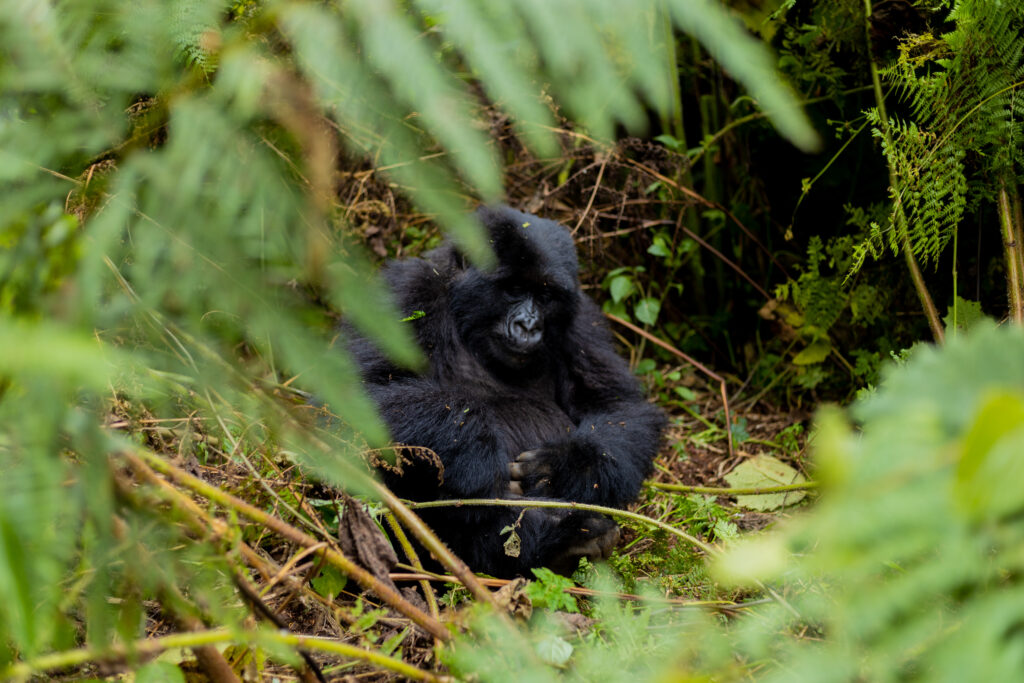
While baby gorillas are called infants just like human babies, that’s only one of many similarities between us and gorillas. Another interesting fact about gorillas is that they sleep in nests. Okay, we know what you’re probably thinking. Right now, you’re picturing a nest, in a tree, similar to that a bird would use — but bigger. Instead, a gorilla’s nest is similar to a bed! They assemble different types of vegetation on the ground to give themselves a comfy place to sleep.
But they don’t use the same nest every day — they actually build new ones each and every time they are going to bed! Everyone except the infants, at least. Mostly gorillas sleep in the evening, but they have been observed to take a midday nap. And yes, you guessed it — they make new nests for naps too.
Gorilla Nests
Do gorillas create nests to sleep in? Yes! They create nests to sleep in, typically on the ground or in trees, depending on their environment. These nests are built by weaving branches, leaves, and other vegetation into a flat, comfortable structure. Gorillas construct a new nest every night, ensuring they have a clean and safe place to rest.
Adult gorillas, especially silverbacks, usually make larger nests, while younger gorillas tend to build smaller ones. The nests are designed for comfort and security, providing a resting place for the gorillas after their daily activities. While gorillas may sometimes use natural structures like tree branches for shelter, their nests are their primary form of rest and protection.
Different Types of Gorilla Nests
Gorillas create nests using materials found in their environment, and the way they build them can differ depending on their habitat, whether it’s mountainous, lowland, or forested regions.
-
Mountain Gorillas (Rwanda, Uganda, and Congo):
- Materials: Mountain gorillas in high-altitude regions rely on strong branches, leaves, and grasses. They choose pliable branches that are easy to manipulate into nest shapes.
- Construction: These gorillas often build their nests either on the ground or in the lower branches of trees, where there is a mix of dense foliage for added protection. The nests are large, often woven with leaves and branches to create a soft, supportive surface. In tree nests, they are crafted to ensure stability, using lower branches close to the trunk for added security.
- Routine: Every night, gorillas create a new nest, using fresh materials to ensure a clean, comfortable resting place. This practice is vital for their protection and comfort.
-
Lowland Gorillas (Congo Basin):
- Materials: In the lowland forests, gorillas have access to an abundance of leaves, vines, and ferns, which they use to build their nests.
- Construction: These gorillas build nests on the forest floor or occasionally in trees, depending on the available materials. The nests on the ground are densely packed with leaves and vines, offering a stable and cushioned resting place. In areas with larger, flexible trees, they may build tree nests, though these are typically closer to the ground.
- Adaptation: Lowland gorillas are versatile, adjusting their nest-building methods to suit the terrain and materials they find in their environment, ensuring a safe and comfortable resting space.
-
Common Nesting Techniques:
- Regardless of the habitat, gorillas build nests with a well-defined structure. They create a base layer using thicker branches and materials to provide a strong foundation, then add softer leaves and plant materials for comfort. The nests are often bowl-shaped, designed to support the gorilla’s body while protecting them during sleep.
- Tree Nesting: While tree nesting is more common in dense, mountainous forests, it can also occur in lowland regions with suitable trees. These nests are placed in lower branches and offer extra protection from predators and insects.
No matter where they live, gorillas’ nesting behavior ensures they have a secure, restful environment each night, which is crucial for their well-being and daily activities.
They’re Huge!
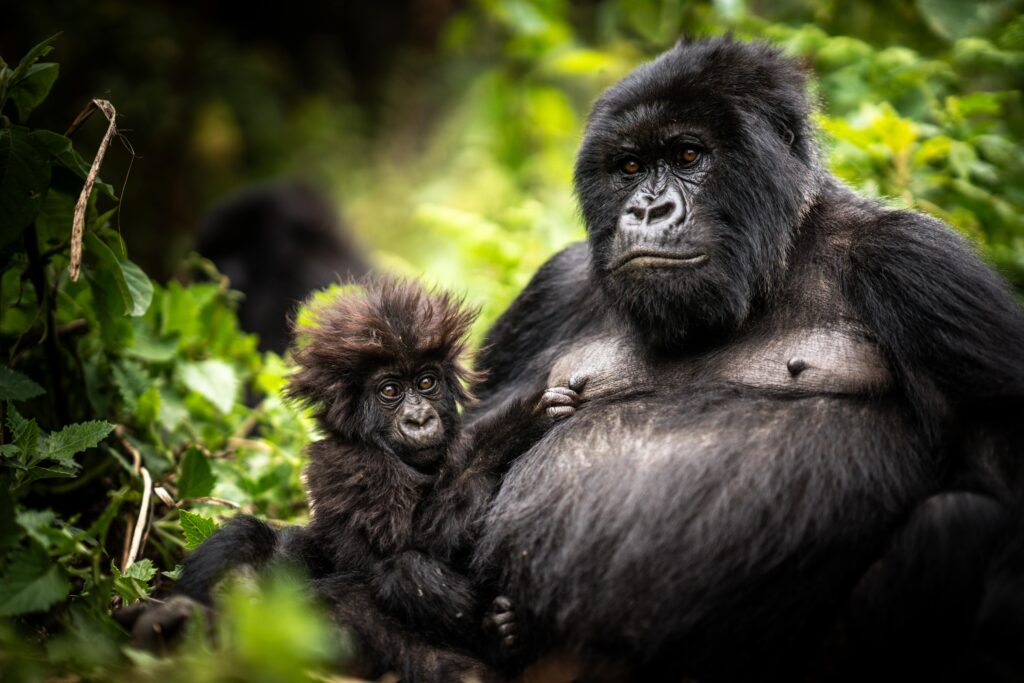
Just about everyone understands that gorillas are big, but do you know just how big they actually are? Female gorillas are smaller than the males, however, they average around four-and-a-half feet tall, and usually weigh in around 200 pounds. While this isn’t insanely tall, these proportions make for a strong, impressive creature.
Male gorillas come in about a foot taller than the females, averaging around five-and-a-half feet tall, and they weigh in at about 400 pounds! That’s very big! Let’s break down the different gorilla types below.
Gorilla Size Compared to Humans
Gorillas are much larger and heavier than humans, with considerable size differences between males and females. Adult male gorillas, especially dominant silverbacks, typically stand about 5.5 to 5.9 feet (1.7 to 1.8 meters) tall when fully upright, although they generally move on all fours, which places them at around 4.5 to 5 feet (1.4 to 1.5 meters) in height. Female gorillas are smaller, typically standing 4.5 feet (1.4 meters) tall when upright and 3.5 feet (1.1 meters) when on all fours. For comparison, the average human male is approximately 5.9 feet (1.8 meters) tall, and the average female is around 5.4 feet (1.6 meters).
Gorilla Weight vs Human Weight
In terms of weight, gorillas are far heavier than humans. A male gorilla can weigh anywhere from 300 to 485 pounds (140 to 220 kilograms), with larger silverbacks reaching the upper end of the scale. In contrast, the average human male weighs around 190 to 200 pounds (86 to 91 kilograms). Female gorillas typically weigh between 150 and 250 pounds (68 to 113 kilograms), which is still heavier than the average human female, who weighs about 150 pounds (68 kilograms). Although gorillas are far stronger than humans, especially in terms of muscle mass, humans excel in dexterity and cognitive abilities.
Hand Size: Human vs Gorilla
Different Sizes of Gorillas
The Western Gorilla, which includes both the Western Lowland Gorilla and the Cross River Gorilla, is one of the largest species of great apes. Male Western Gorillas typically stand around 5.5 feet (1.7 meters) tall when upright, and when on all fours, they measure approximately 4.5 feet (1.4 meters). They can weigh between 300 and 485 pounds (140 to 220 kilograms), with silverbacks being the heaviest. Female Western Gorillas are smaller, standing around 4.5 feet (1.4 meters) tall and weighing between 150 and 250 pounds (68 to 113 kilograms), making them notably lighter than their male counterparts.
Size of Western Lowland Gorilla
The Western Lowland Gorilla, a subspecies of the Western Gorilla, is found across the rainforests of Central and West Africa. While still large, the Western Lowland Gorilla tends to be slightly smaller than other subspecies. Adult males usually weigh between 300 and 400 pounds (136 to 180 kilograms) and stand around 5.5 feet (1.7 meters) tall when fully upright. When on all fours, their height is about 4.5 feet (1.4 meters). Females in this subspecies are smaller, with a weight range of 150 to 250 pounds (68 to 113 kilograms) and a height of 4.5 feet (1.4 meters) when standing upright.
Mountain Gorilla Measures At
The Mountain Gorilla, native to the high-altitude forests of Rwanda, Uganda, and the Democratic Republic of the Congo, is one of the most robust gorilla subspecies. Adult male Mountain Gorillas, or silverbacks, are exceptionally large, weighing between 350 and 485 pounds (160 to 220 kilograms). They can stand 5.5 to 5.9 feet (1.7 to 1.8 meters) tall when upright and measure about 4.5 feet (1.4 meters) when on all fours. Female Mountain Gorillas are smaller, weighing between 150 and 250 pounds (68 to 113 kilograms) and typically standing around 4.5 feet (1.4 meters) tall when upright.
Eastern Lowland Gorilla Sizes
The Eastern Lowland Gorilla, another subspecies of the Eastern Gorilla, is generally larger than the Western Lowland Gorilla. Males typically weigh between 400 and 500 pounds (180 to 225 kilograms), with a height of 5.5 to 5.9 feet (1.7 to 1.8 meters) when standing. On all fours, their height reaches around 4.5 feet (1.4 meters). Female Eastern Lowland Gorillas are smaller than males, weighing between 150 and 250 pounds (68 to 113 kilograms) and standing at approximately 4.5 feet (1.4 meters). These gorillas, similar in size to Mountain Gorillas, are known for their impressive strength and considerable bulk.
They’re Innovative Problem Solvers
Koko The Gorilla – One of The Smartest Gorillas
Gorillas and Ant: 2014
Book Your Gorilla Tour And Learn For Yourself Today
Experiencing gorillas in their natural habitat is a unique adventure that’s closer than you may think. With Amahoro Tours, you can explore the lush forests of Rwanda, Uganda, or the Congo, home to some of the world’s most majestic wildlife. Embark on a once-in-a-lifetime journey to witness these incredible creatures up close in their natural surroundings. Our expert Gorilla trekking guides will lead you through these captivating landscapes, sharing fascinating insights about gorillas’ behaviors, their social structure, and the delicate ecosystems they inhabit. This is an adventure you will never forget, with memories that will last a lifetime. Interested in learning more about our 1 day gorilla trek in Rwanda? We offer a multitude of Rwanda gorilla tours, Congo gorilla trekking and Uganda gorilla family treks.
Why wait to turn this dream into a reality? Reach out to Amahoro Tours today to book your gorilla trek and find the best gorilla tours in Rwanda to create memories that will stay with you forever!
See What Our Guests Are Saying