
Comparing Gorilla Trekking vs Chimpanzee Tracking in Rwanda
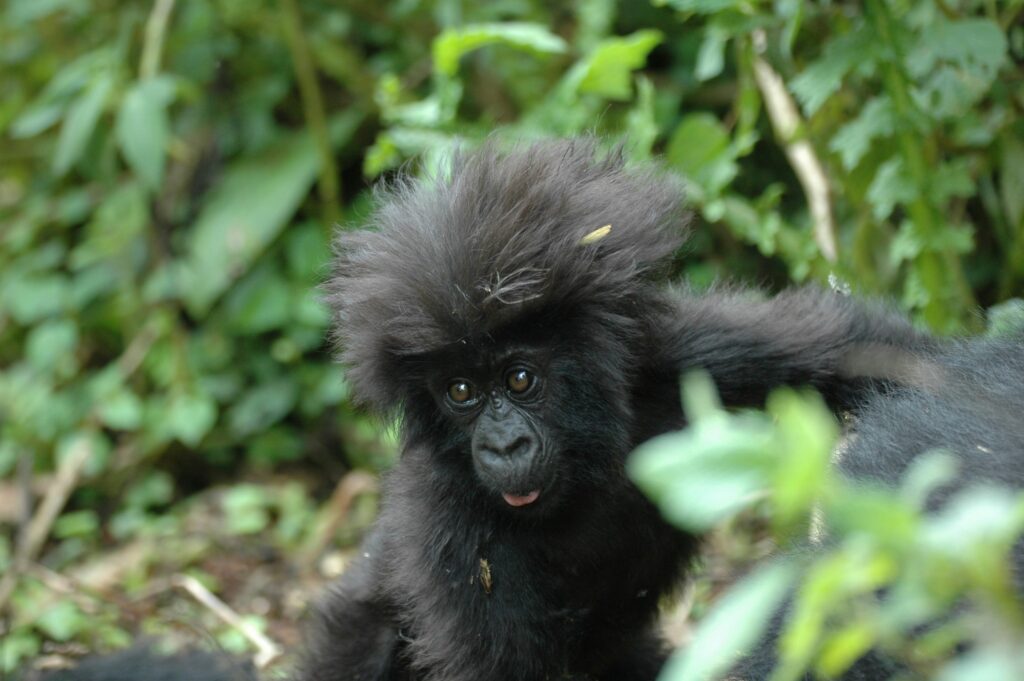
Rwanda has earned a global reputation as one of Africa’s premier wildlife destinations, offering travelers the rare opportunity to encounter two of the world’s most intelligent and captivating primates in their natural habitats. When thinking of gorilla trekking vs chimpanzee tracking, its hard to not want to do both! While many visitors arrive with gorillas at the top of their bucket list, Rwanda is also home to thriving chimpanzee populations that can be observed deep within the ancient rainforests of Nyungwe National Park. The question many travelers face isn’t whether they should experience Rwanda’s wildlife—it’s whether they should choose gorilla trekking or chimpanzee tracking.
If your schedule allows, experiencing both creates one of Africa’s most rewarding wildlife itineraries. Gorilla trekking and chimpanzee tracking complement each other perfectly, providing a deeper appreciation for Rwanda’s protected forests, successful conservation efforts, and incredible diversity of wildlife. This guide compares every aspect of both experiences—from hiking difficulty and permit costs to photography, wildlife encounters, and conservation—to help you decide which adventure is right for your Rwanda safari. Learn more from Amahoro Tours, a Rwanda tour company, on chimpanzee trekking vs gorilla tracking now.
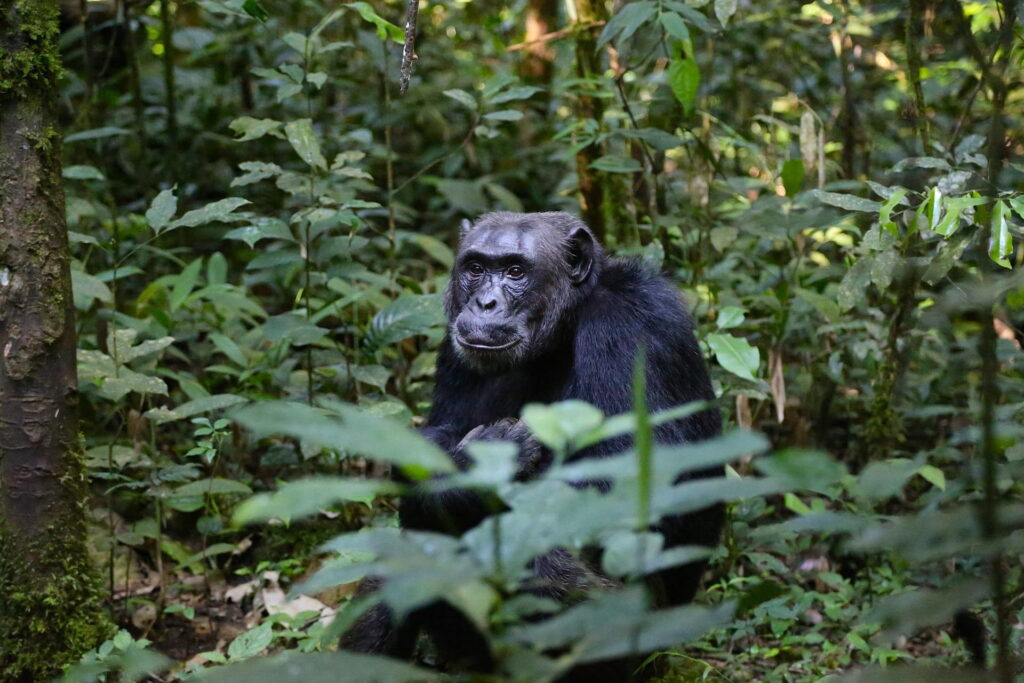
Gorilla Trekking vs. Chimpanzee Tracking in Rwanda: At a Glance
| Feature | Gorilla Trekking | Chimpanzee Tracking |
|---|---|---|
| Primary Location | Volcanoes National Park | Nyungwe National Park |
| Main Species | Mountain Gorillas | Eastern Chimpanzees |
| Permit Cost | Higher | More affordable |
| Trek Difficulty | Moderate | Moderate to challenging |
| Animal Behavior | Calm and relaxed | Fast-moving and energetic |
| Photography | Excellent for portraits | Best for action photography |
| Viewing Time | One hour | One hour |
| Best For | First-time visitors | Wildlife enthusiasts |
| Terrain | Bamboo forest and volcanic slopes | Dense rainforest |
| Experience | Personal and emotional | Active and exciting |
Although both adventures involve guided hikes through Rwanda’s protected forests, the similarities largely end there. Everything from the pace of the trek to the behavior of the animals creates two remarkably different wildlife experiences.
Rwanda Is One of the Few Places You Can Experience Both Gorillas and Chimpanzees
Few destinations in Africa offer such diverse primate encounters within a relatively compact area. In just a week, travelers can hike through the mist-covered slopes of Volcanoes National Park to observe endangered mountain gorillas before heading south to Nyungwe National Park, where ancient rainforest echoes with the calls of wild chimpanzees.
This diversity is one of Rwanda’s greatest strengths. Rather than focusing on a single iconic species, the country protects an impressive range of ecosystems that support hundreds of bird species, numerous primates, and remarkable plant life. Well-maintained roads, professional guides, and high conservation standards make it surprisingly easy to combine multiple parks into one seamless itinerary.
For travelers seeking more than a single wildlife encounter, Rwanda delivers an experience that continues to evolve from one destination to the next.
Gorilla Trekking in Rwanda
Experience a once-in-a-lifetime wildlife encounter as you stand just feet away from a gorilla family in their natural rainforest home.
An Encounter Unlike Anything Else
Gorilla trekking takes place in Volcanoes National Park, where the forested slopes of the Virunga Mountains shelter one of the world’s last remaining populations of mountain gorillas. Protected by decades of conservation work, these endangered primates have become the symbol of Rwanda’s remarkable wildlife recovery. Every trek begins with an early morning briefing before small groups are assigned to a habituated gorilla family. Experienced rangers lead visitors into the forest, following signs left by trackers who locate the gorillas before dawn. Depending on where the family has traveled overnight, the hike may last less than an hour or several hours through bamboo forests, volcanic foothills, and dense vegetation.
Then comes the moment every visitor remembers. As the forest opens, a gorilla family gradually comes into view. A massive silverback may quietly watch over the group while females feed nearby and playful youngsters tumble through the undergrowth. Rather than feeling like spectators, many visitors describe the experience as sharing space with another family. The gorillas often continue their daily routines, seemingly unconcerned by the respectful presence of observers.
It is this calm, intimate atmosphere that makes gorilla trekking one of Africa’s most sought-after wildlife experiences.
What Makes Gorilla Trekking So Special?
Unlike many Rwanda safari experiences where wildlife is viewed from a vehicle, gorilla trekking places visitors on foot inside the animals’ natural habitat. There are no fences, no viewing platforms, and no artificial settings. Every encounter unfolds naturally within the rainforest.
Mountain gorillas also possess strikingly human characteristics. Their facial expressions, interactions between mothers and infants, playful juveniles, and protective silverbacks often remind visitors just how closely connected humans and great apes truly are. Watching a family interact at close range creates an emotional connection that photographs alone can never fully capture.
For many travelers, gorilla trekking becomes the defining highlight of an entire African journey.
Chimpanzee Tracking in Rwanda
Follow expert Rwanda tour guides into Nyungwe’s ancient rainforest for an exciting trek where energetic chimpanzees create a fast-paced wildlife adventure unlike any other.
A Completely Different Forest Adventure
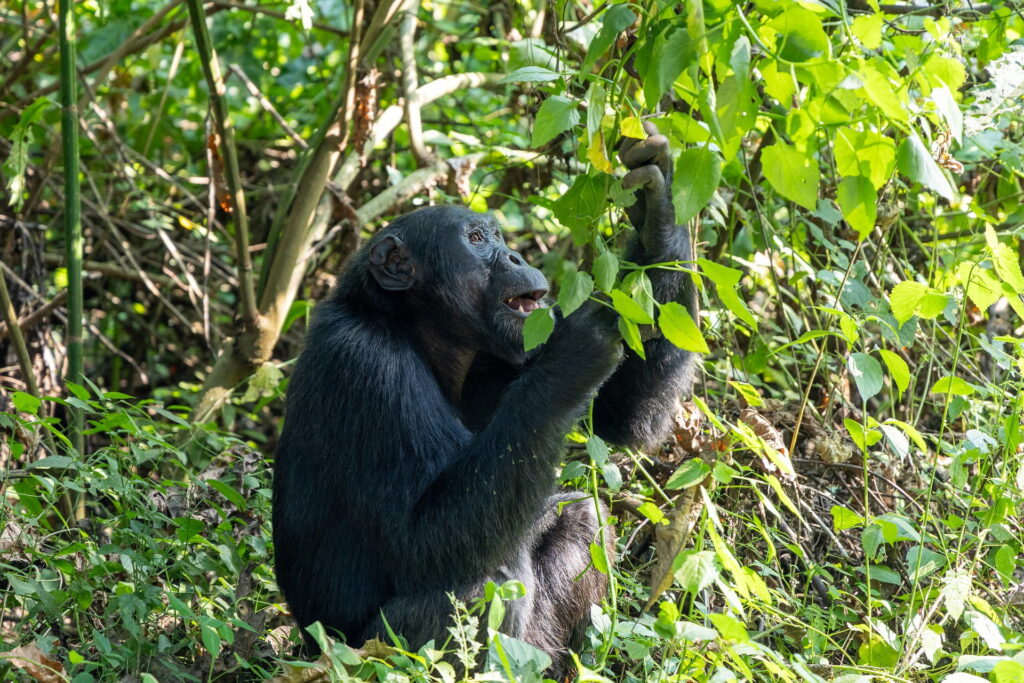
While gorillas create unforgettable moments through their quiet presence, chimpanzees captivate visitors with constant energy and movement. Chimpanzee tracking takes place primarily within Nyungwe National Park, one of Africa’s oldest montane rainforests and a biodiversity hotspot filled with towering trees, waterfalls, orchids, and more than a dozen species of primates. Unlike the relatively open bamboo forests found in Volcanoes National Park, Nyungwe surrounds visitors with dense jungle that feels wonderfully wild and untouched.
One day gorilla treks begin before sunrise, when chimpanzees are at their most active. Rangers lead small groups into the forest as the sounds of birds gradually give way to loud pant-hoots echoing through the canopy. Those calls signal that the search is getting close. Then the pace changes. Chimpanzees rarely remain in one place for long. They leap effortlessly between branches, climb towering trees, forage across the forest floor, and communicate constantly through calls, gestures, and facial expressions. Every few minutes something new captures your attention—a youngster swinging overhead, adults grooming one another, or an entire troop disappearing into the canopy before suddenly reappearing nearby.
The experience feels less like quietly observing wildlife and more like becoming part of the forest itself.
Why Chimpanzee Tracking Deserves More Attention
Although gorilla trekking often receives the spotlight, chimpanzee tracking offers a completely different perspective on Rwanda’s wildlife.
Chimpanzees display remarkable intelligence, problem-solving abilities, and complex social interactions. Their curiosity and unpredictable behavior ensure that no two treks are ever alike. Combined with Nyungwe’s spectacular scenery, abundant birdlife, and rich biodiversity, chimpanzee tracking in Rwanda becomes far more than simply searching for one species—it is an immersive rainforest adventure that appeals to travelers who enjoy active exploration and discovering wildlife in a dynamic natural setting.
See What Our Guests Are Saying
 This is THE best tour company in Rwanda! - My husband and I had the absolute best experience with Amahoro Tours and highly recommend you book your Rwanda trip with them. Amos was extremely helpful and we fell in love with Rwanda in large part because we had such a great guide named Edmond who was very professional, prompt, and had a wealth of knowledge. He’s likely the best driver in the whole country so you should request him specifically! After visiting and working with other tour companies in Rwanda, Tanzania, and Zanzibar, we can confidently say Amahoro Tours was the best and we look forward to using them again in the future.

 travel_more202
January 10, 2026
Rwanda is Amazing - Had a fantastic experience with Amahoro tours (through jenman safaris).
We got to see such amazing wildlife in Rwanda as well as some cultural/historical places like the genocide memorial/the king's palace/hotel des milles collines. The gorilla and chimpanzee trekking were real highlights. Accommodations were excellent!
And of course, thank you to our guide/driver Mugabe in helping us get to our various locations and explaining various aspects about Rwanda!
 Connector38769434417
July 21, 2026