
Rwanda African Buffalo: Where to See African Buffalo on Safari
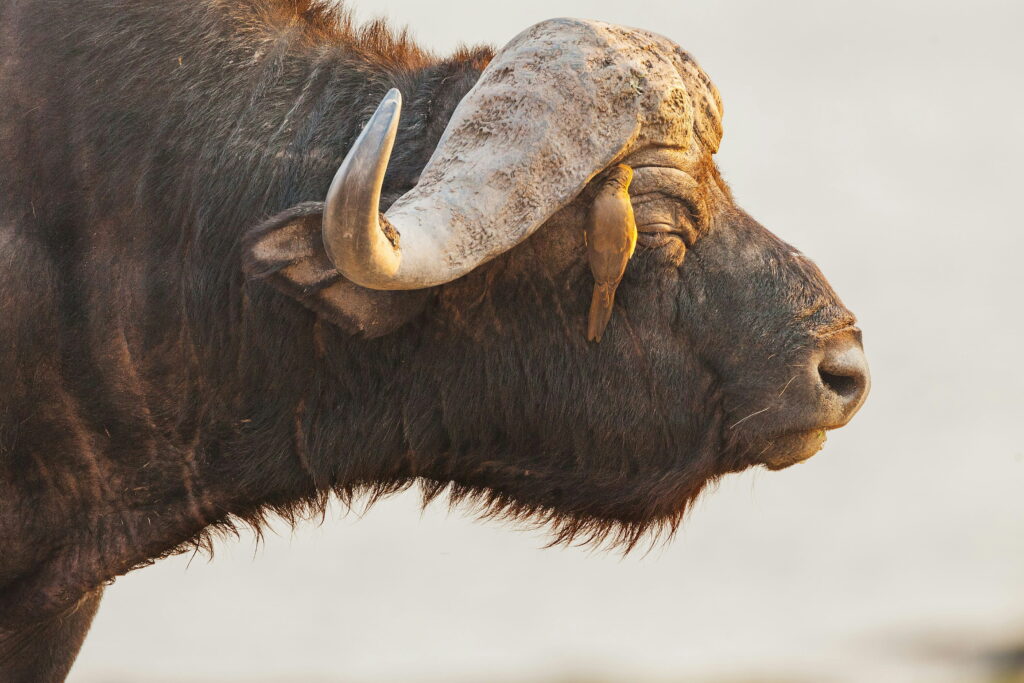
When people search for water buffalo in Rwanda, they are often picturing the large, powerful animals seen roaming the country’s savannah. There is an important distinction, however: Rwanda’s wild buffalo are African buffalo, scientifically known as Syncerus caffer, rather than Asian water buffalo, Bubalus bubalis. Also commonly called Cape buffalo, these impressive animals are among the most memorable species to encounter on safari in Akagera National Park. Their appeal goes well beyond their size, as buffalo live within complex social groups where mothers protect calves, bulls establish their place within the herd, and dozens or even hundreds of animals can respond almost instantly to danger. Their connection to grasslands, water, predators and other grazing animals also makes them an important part of Akagera’s ecosystem. Learn more about seeing one of the Big 5 from our Rwanda tours – Amahoro Tours now.
Wild Buffalo in Rwanda – Safari to see African Buffallo
Seeing African buffalo in the wild is one of the memorable experiences of a Rwanda safari. Powerful, social and highly alert, these imposing animals can be found moving through the open savannah, wetlands and grasslands of Akagera National Park, often in herds ranging from a few animals to dozens. For travelers planning a safari to see African buffalo in Rwanda, encountering a herd in its natural environment offers a chance to observe their behavior up close, from protective mothers and calves to dominant bulls and the herd’s remarkably coordinated response to potential threats. Although they are sometimes called water buffalo, Rwanda’s wild safari animals are African buffalo, or Cape buffalo, a completely different species from the Asian water buffalo.
What Kind of Buffalo Lives in Rwanda?
The buffalo found in Rwanda are African buffalo, Syncerus caffer. They are native to sub-Saharan Africa and occupy a wide range of habitats, including savannah, grassland, woodland and areas surrounding wetlands and permanent water. In Rwanda, Akagera National Park is the country’s principal destination for seeing them in the wild.
Are African Buffalo and Water Buffalo the Same Animal?
They are not. Asian water buffalo belong to a different genus and species and are strongly associated with Asia, including extensive domestic populations. African buffalo belong to the genus Syncerus. Both are members of the wider cattle family, but their appearance, distribution and evolutionary histories are different.
Why Do People Call Them Cape Buffalo?
Cape buffalo is one of the common names used for African buffalo, particularly when referring to the large savannah populations found across eastern and southern Africa. The name does not indicate a separate species. Regional populations can vary considerably in body size, coloration and horn shape, which explains why buffalo photographed in different African countries may not all look identical.
What Does an African Buffalo Look Like?
A mature buffalo has a distinctive combination of bulk and low-slung power. The body is heavily built, the chest is broad and the shoulders are muscular, while the head carries a pair of substantial horns. Coat color can vary, although the large savannah forms are generally dark. Older animals often carry scars and worn horns, evidence of years spent navigating competition, predators and the rest of herd life.
Buffalo Horns
Both male and female African buffalo grow horns. Their shape and development become particularly impressive in mature animals, and the bases of a bull’s horns eventually form a thick structure across the forehead known as a boss. Horns serve several purposes, including defense against predators and competition between males.
The Buffalo Horn Boss
The boss is one of the easiest ways to recognize a mature bull. It forms where the bases of the horns meet across the forehead and becomes particularly substantial with age. During confrontations between males, the thickened area provides additional protection to the head as animals push and lock horns.
How Big Is an African Buffalo?
Size varies significantly among African buffalo populations, so there is no single weight that represents every animal. Large savannah bulls can exceed 800 kilograms, while females are generally lighter and some regional forms are considerably smaller. Their relatively modest shoulder height can also be deceptive because much of the animal’s impressive mass is concentrated through the chest, shoulders and neck.
How Much Does an African Buffalo Weigh?
Large males can weigh more than 835 kilograms, while females in the largest populations can approach 500 kilograms. Body weight depends on sex, age, habitat and regional population. Food availability also matters because maintaining such a substantial body requires access to reliable grazing.
How Tall Is an African Buffalo?
The largest animals can stand roughly 1.4 to 1.6 meters at the shoulder. Compared with an elephant or giraffe, that may not sound particularly tall, but the low profile is part of the species’ distinctive appearance. A powerful shoulder structure and massive head give the buffalo its characteristic shape.
How Fast Can an African Buffalo Run?
For such a heavy animal, its ability to move quickly can be surprising. Estimates of maximum speed vary, but the Cape buffalo are capable of running at considerable speed when alarmed or threatened. More important than a top-speed statistic is the combination of acceleration, mass, horns and herd behavior that makes a charging buffalo an animal to respect.
African Buffalo vs a Human
Standing beside an African buffalo would give you a very different idea of what “big” means. Humans are taller when standing upright, but buffalo carry far more weight through a compact, heavily muscled frame designed for power. Their broad shoulders, thick hide, substantial head, and sweeping horns give them physical advantages that no person could match without equipment. They are also capable of moving with surprising speed despite their bulk. That combination of mass, muscle, acceleration, and natural weaponry is part of what makes the African Cape buffalo such an impressive animal to encounter on safari. Rather than simply looking at a buffalo as a large cow-like animal, comparing its physical abilities with those of a person helps reveal why this species commands so much respect in the wild.
- Weight: Up to 1,500+ pounds vs. roughly 150–200 pounds for a typical adult human.
- Height: About 4.5–5.5 feet at the shoulder; humans are taller when standing upright.
- Speed: Buffalo can reach approximately 30–35 mph, far faster than humans.
- Strength: A buffalo’s powerful shoulders, neck, and legs provide tremendous physical force.
- Horns: Both males and females have horns used for defense and fighting.
- Protection: Thick hide and a heavy skull provide natural protection that humans lack.
- Agility: Despite their size, buffalo can turn quickly and navigate difficult terrain.
- Diet: Buffalo are grazers, feeding primarily on grasses and other vegetation.
- Social life: They typically travel in herds, using numbers for protection.
- Natural weapons: Buffalo have horns, powerful legs, and immense body weight; humans do not.
Where Do African Buffalo Live?
Rwanda buffalo are adaptable grazers, but water remains an important part of their habitat requirements. Across Africa, they can occupy open savannah, floodplains, woodland and forest environments. Their distribution is closely connected to the availability of suitable forage and water, especially during periods when rainfall is limited.
African Buffalo Habitat
Open grassland provides the grazing opportunities that large herds require, while woodland and wetland areas can offer shade, shelter and additional resources. Habitat preferences vary between regional populations, which is one reason the species can look and behave somewhat differently from one part of Africa to another.
Why Water Matters
A buffalo weighing several hundred kilograms needs substantial food and regular access to water. During hotter, drier periods, water availability can influence where herds spend their time and how far they travel between feeding areas.
Buffalo Habitat in Rwanda
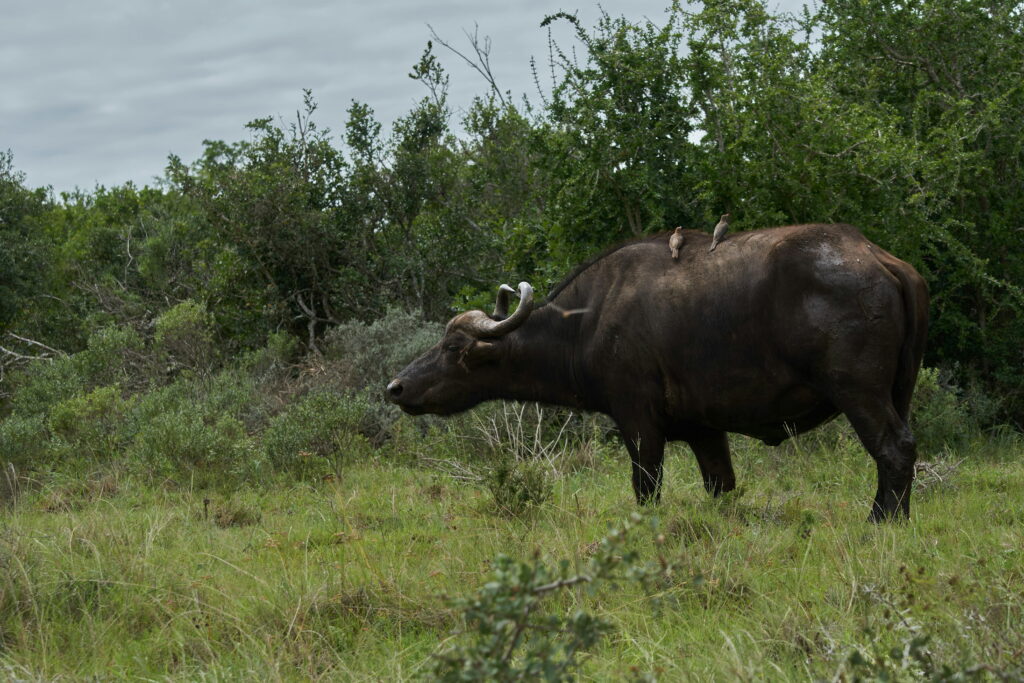
Akagera provides an unusual mixture of habitats for a relatively compact safari destination. Open plains and grasslands occur alongside lakes, wetlands, woodland and other savannah environments. This combination supplies the grazing and water resources that make the park suitable for Rwandan buffalo and a wide variety of other large mammals.
African Buffalo in Akagera National Park
Akagera is the natural focus for anyone hoping to see buffalo in Rwanda. Located in the country’s eastern region, the park protects a savannah ecosystem unlike the mountain and rainforest environments for which Rwanda is perhaps better known.
Where Buffalo Are Found in Akagera
Open plains and grassland are particularly important areas for buffalo. Herds may also be encountered close to water or moving between feeding and resting areas. Their exact location changes with season, weather, vegetation and water availability, which is why wildlife viewing is never completely predictable.
What a Buffalo Sighting Looks Like
A distant herd may initially appear to be a dark line across the grass. As a vehicle approaches, individual animals become easier to distinguish. Bulls, cows and calves may all be visible, with some animals grazing while others remain alert. Given enough time, the group begins to reveal its social behavior rather than simply becoming another item on a safari checklist.
African Buffalo Herds and Family Life
Perhaps the most interesting thing about buffalo is what happens within the herd. These animals are intensely social, and their relationships extend well beyond simply remaining together for protection.
Do African Buffalo Live in Families?
They live in structured social groups that can include females, calves, younger animals and adult males. Groups are not necessarily permanent in the way a human family might be. Individuals can move between groups, and males may spend time in bachelor herds.
How Large Are Buffalo Herds?
Cape buffalo herds can range from 20–50 animals to 500+, depending on habitat, season, and access to food and water. Smaller groups may spread out while grazing, while larger herds can form when conditions bring buffalo together around productive feeding areas or reliable water sources. In Rwanda’s Akagera National Park, these gatherings can create an impressive safari sight as dozens or even hundreds of buffalo move across the savanna together. Herding also provides an important advantage against predators, with many animals watching for danger at once.
African Buffalo Leadership
Cape buffalo do not have a single leader controlling the herd, even when groups reach 500+ animals. Movement is generally influenced by adult females, which appear to play the strongest role in deciding where the herd travels, particularly when searching for food or water. Several cows may begin moving in the same direction, with other members gradually following rather than waiting for one dominant buffalo to lead. Adult bulls have an important place in the social hierarchy and may influence the group through their presence and dominance, but they are not typically the herd’s primary decision-makers for movement. In Rwanda’s Akagera National Park, this shared decision-making becomes especially interesting to observe in large herds, where hundreds of buffalo can shift direction and move together without any obvious single leader.
Cape Buffalo Mothers and Calves
A female carries her calf for approximately 340 days, making reproduction a substantial investment. Once born, the young animal remains closely associated with its mother and benefits from the protection of the surrounding herd. Calves are also among the most vulnerable members of a group when predators are nearby.
What Do African Buffalo Eat?
Grass is the foundation of the African buffalo diet. These animals are primarily grazers, using their mouths to crop vegetation before processing it through a specialized ruminant digestive system.
What Plants Do Buffalo Eat?
Grasses and sedges make up most of their diet, with preferences changing according to what is available. Fresh, leafy growth can be particularly valuable because it generally provides better nutrition than older, tougher vegetation.
How Do Buffalo Digest Grass?
Like cattle, buffalo are ruminants. Food is swallowed relatively quickly before being brought back up later as cud. The animal then chews this material again, allowing microorganisms in the digestive system to help break down plant matter that would otherwise be difficult to digest.
How Seasons Affect Feeding
Rainfall can transform the availability and quality of grass across Akagera. During wetter periods, new growth provides abundant forage. As the dry season progresses, plants become tougher and less nutritious, and access to water becomes increasingly important.
What Animals Prey on African Buffalo?
A healthy adult buffalo is a formidable target, but size does not make the species immune to predation. Lions are the most important predator associated with adult buffalo, while calves and weakened animals face greater risks.
Lions and Buffalo
Akagera Lion prides may attempt to isolate a buffalo from the protection of the herd. Young animals are particularly vulnerable, although coordinated lion attacks can also bring down larger individuals. The outcome depends on the number of lions, the condition of the buffalo and how effectively the herd responds.
Lions Can Kill an Adult Buffalo
They can, but taking down a healthy adult is dangerous. A lion has to contend with several hundred kilograms of muscle and a pair of horns capable of causing serious injury. Buffalo can also turn the situation around, with adults sometimes charging or pursuing lions that have come too close.
Leopards Hunt Buffalo
A healthy adult buffalo is far too large to be normal leopard prey. Calves are a different matter. A very young buffalo separated from the herd presents a much smaller target, although the protective behavior of surrounding adults creates considerable risk for any leopard in Rwanda.
Hyenas Eat Buffalo
Hyenas can consume buffalo, particularly young, injured or dead animals. There is an important distinction between actively killing an adult buffalo and scavenging one that has already died. Their role as both predator and scavenger allows them to make use of animals at different stages of the food chain.
How Buffalo Defend Themselves
Numbers are one of the herd’s greatest defenses. Adults can form a protective group around vulnerable animals, face predators and respond aggressively when necessary. This collective behavior is one reason predators often look for an isolated, injured or inexperienced target instead of confronting a healthy herd.
What Makes Rwanda’s Buffalo Different?
The buffalo living in Rwanda are not a separate species created by the country’s borders. Their uniqueness comes more from the landscape in which visitors encounter them and the conservation history surrounding Akagera.
Buffalo in Rwanda’s Savannah-Wetland Landscape
Akagera’s mixture of grassland, woodland, lakes and wetlands creates a distinctive setting for Rwanda safari. A Rwanda Cape buffalo sighting here can involve an open herd crossing a plain one day and animals gathering near water on another, depending on seasonal conditions.
Rwanda Compared With Kenya and Tanzania
Kenya and Tanzania are famous for enormous savannah landscapes and some of Africa’s largest wildlife concentrations. Rwanda offers a different scale and itinerary experience. Akagera can form one component of a broader Rwanda journey that includes forests, mountains and primate experiences rather than functioning solely as a traditional safari destination.
Rwanda Compared With Southern Africa
Southern African safari destinations offer their own distinctive buffalo populations and habitats. Rwanda’s advantage is not that its buffalo are inherently “better” or biologically unique, but that seeing them can form part of a compact itinerary combining savannah wildlife with experiences that are difficult to replicate elsewhere.
Rwanda Compared With West and Central Africa
This is where the comparison becomes much more significant. West and Central Africa are home to other recognized forms of African buffalo, including the forest buffalo (S. c. nanus) and the West African and Central African savanna buffalo. Forest buffalo are substantially smaller than Cape buffalo, with adults generally around 265–320 kg, compared with Cape buffalo bulls that can reach roughly 650–900 kg. Forest buffalo also tend to have a more reddish coat and smaller, more backward-sweeping horns.
How Many Buffalo Are in Rwanda?
Wildlife populations change, and figures from older surveys should not be presented as though they were current. The most useful published numbers provide historical context for Akagera’s recovery rather than a precise 2026 headcount.
Akagera Buffalo Population
An aerial census conducted in August 2015 recorded 2,567 buffalo in Akagera. An earlier 2013 census recorded 2,093. These figures demonstrate the value of long-term monitoring, but they should be identified by survey year rather than presented as today’s population. Population estimates can shift because of births, deaths, movement, rainfall, food availability and changes in habitat. Survey methodology also matters. Aerial counts provide an important snapshot, but no single survey should be interpreted as a permanent population total.
African Cape Buffalo Conservation in Rwanda
The return of healthy wildlife populations to Akagera is part of one of Rwanda’s broader conservation stories. The park experienced severe wildlife losses during periods of conflict, settlement and habitat pressure before management and conservation programs began rebuilding the ecosystem.
The History of Buffalo in Akagera
Wildlife numbers declined dramatically during the late twentieth century, but subsequent conservation efforts have helped restore large mammals to the park. African Parks has managed Akagera in partnership with the Rwanda Development Board since 2010, overseeing conservation, tourism and community-focused initiatives.
Rinderpest and Buffalo
Rinderpest was one of the most devastating livestock and wildlife diseases in African history. Major outbreaks caused enormous mortality among susceptible animals, including African buffalo. Although the disease has now been eradicated globally, its historical effect remains relevant when examining the dramatic changes African wildlife populations have experienced.
Other Diseases Affecting Buffalo
Wild buffalo can be affected by diseases including bovine tuberculosis and foot-and-mouth disease. These concerns become particularly important where wildlife populations live near domestic cattle, because disease can move across the boundary between protected ecosystems and agricultural areas.
What Happens to Buffalo During Drought?
Rainfall determines far more than the color of Akagera’s grass. It influences the quantity and quality of food available, the location of water and theAs grasses mature and water sources become more limited, herds may concentrate around reliable resources. Competition for quality forage can increase, while animals in poor condition may become more vulnerable to disease way herbivores distribute themselves throughout the landscape.
Buffalo During the Dry Season
As grasses mature and water sources become more limited, herds may concentrate around reliable resources. Competition for quality forage can increase, while animals in poor condition may become more vulnerable to disease and predators.
Buffalo During the Wet Season
Rain brings a flush of new vegetation and spreads water across the landscape. Conditions can be excellent for grazing, although dense green growth may make animals harder for visitors to spot. For photographers, the saturated colors and dramatic skies can also create a very different safari aesthetic.
Food Shortages and Buffalo Health
Extended periods of poor forage can affect body condition and reproductive success. Young animals and individuals already weakened by age or illness are generally less equipped to cope with prolonged nutritional stress.
Best Time to See Buffalo in Rwanda
Buffalo can be encountered throughout the year, so the best time depends on the type of safari experience a traveler wants. Seasonal conditions influence grass height, water availability, visibility and animal movement rather than creating a simple “buffalo season.”
Dry Season Buffalo Viewing
Lower rainfall can reduce vegetation height and make animals easier to see across open plains. At the same time, water becomes more concentrated, which can influence where herds spend their time.
Wet Season Buffalo Viewing
The rainy period brings greener landscapes and fresh grazing. Wildlife remains present, but thicker vegetation can make certain animals less visible. Travelers who enjoy dramatic scenery and lush landscapes may prefer this period despite the different viewing conditions.
Best Time of Day for Buffalo
Early mornings and late afternoons are generally attractive periods for game drives vs night game drives in Akagera because temperatures are more comfortable and wildlife activity can increase as the heat of the day eases. A Rwanda guide’s knowledge of current animal movements remains more important than choosing a precise hour based on a general rule.
Seeing African Buffalo on an Amahoro Tours Safari
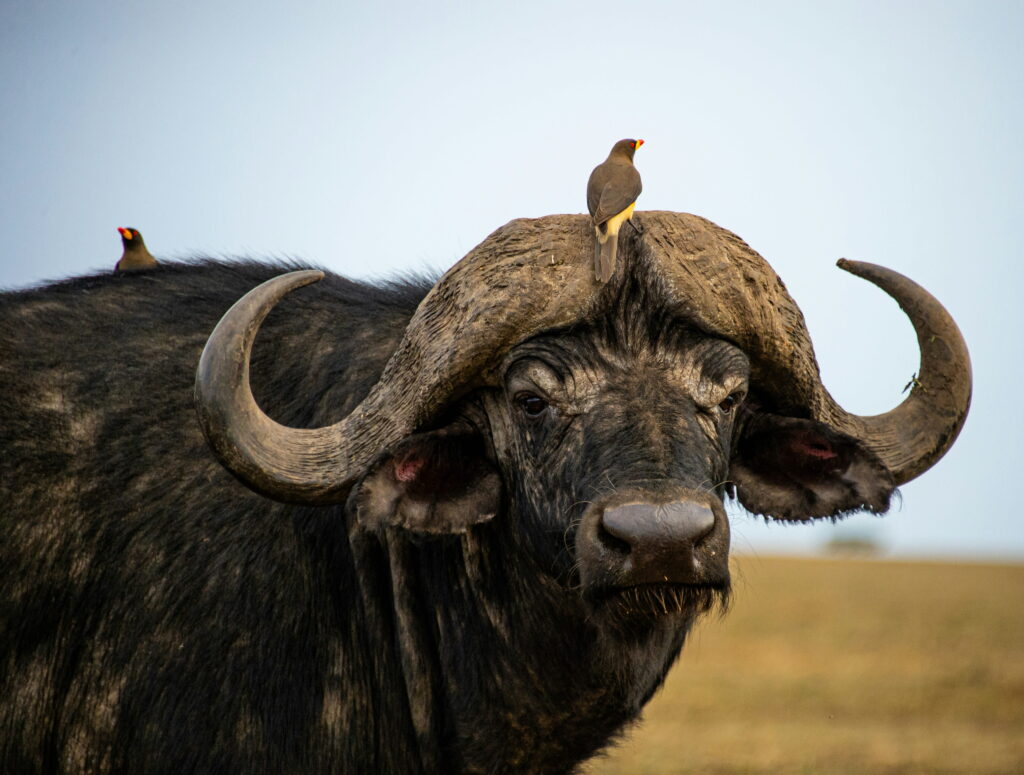
A buffalo sighting is more rewarding when there is enough context to understand what is happening in front of you. Amahoro Tours’ Akagera experiences provide an opportunity to explore the park with guides who can interpret the landscape rather than simply point out individual species. Game drives provide the primary opportunity to watch buffalo in their natural environment. The experience can range from spotting a distant herd on an open plain to spending time alongside animals as they graze, rest or move toward water.
Is the African Buffalo One of the Big Five?
Yes. The African buffalo is one of the traditional Big Five, alongside the African elephant, lion, leopard and rhinoceros. The phrase originally referred to animals considered particularly challenging and dangerous to hunt on foot rather than simply being a list of Africa’s five largest mammals. Akagera is Rwanda’s Big Five safari destination. The park is home to buffalo, elephant, lion, leopard and rhinoceros, allowing visitors to pursue the classic Big Five experience within a country also renowned for its mountain gorillas.
African Buffalo
Buffalo are often among the more sociable Big Five animals to observe because herds can remain visible for extended periods. Their interactions also provide an opportunity to see social behavior rather than simply a solitary animal at rest.
Lion
Lions were reintroduced to Akagera in 2015 as part of the park’s wider restoration. Their presence adds an important predator to an ecosystem where large herbivores such as buffalo can play both prey and ecological roles.
Leopard
Leopards are notoriously elusive and can require considerably more patience than a large buffalo herd in an open grassland. Their solitary habits and preference for cover make a sighting particularly rewarding.
Elephant
African elephants are among Akagera’s most recognizable large mammals. Their presence alongside buffalo, rhino, lions and leopards contributes to the park’s status as Rwanda’s Big Five destination. The elephants in Rwanda are something of their own!
Rhinoceros
The return of rhinoceros in Rwanda has been an important chapter in Akagera’s conservation story. Eastern black rhinos were reintroduced in 2017, followed by southern white rhinos in 2021, strengthening the park’s Big Five profile.
Why African Buffalo Matter to Akagera
The buffalo is an important part of the ecosystem rather than simply a desirable safari sighting. Large grazing animals influence vegetation, transfer nutrients through the landscape and provide food for predators.
Buffalo as Grazers
Repeated grazing helps shape grassland communities. Their feeding behavior is part of the natural cycle that connects vegetation with herbivores, predators and decomposers.
Buffalo and the Food Chain
A herd can support predators directly through calves or vulnerable adults, while carcasses provide food for scavengers and decomposers. The animal’s ecological importance therefore continues even beyond its lifetime.
Responsible Buffalo Tourism
Wildlife viewing works best when visitors allow animals to behave naturally. Buffalo should never be approached on foot without appropriate professional guidance, fed, cornered or deliberately disturbed for a photograph. A safari vehicle provides an important buffer between visitors and wildlife, but distance still matters. Following a guide’s instructions helps prevent unnecessary stress for the animals and reduces risk for everyone in the vehicle. Rwanda tourism can contribute to the financial sustainability of protected areas while supporting employment and community programs. In Akagera, the recovery of wildlife has helped transform the park into a major destination for visitors seeking Rwanda’s savannah experience.
See African Buffalo in Akagera With Amahoro Tours
Watching a buffalo herd in Akagera is about much more than seeing one of the Big Five. The longer you watch, the more there is to notice: calves moving beside their mothers, bulls interacting, animals responding to a distant disturbance and an entire herd shifting across the grassland as one living group. Amahoro Tours can make that experience part of a broader Rwanda safari, with Akagera game drives, night game drives and itineraries that can also include the country’s famous mountain gorillas and other wildlife experiences. For travelers searching for water buffalo in Rwanda, the journey ultimately leads to the African buffalo of Akagera: powerful, social, adaptable and perfectly suited to one of Rwanda’s most remarkable landscapes.
3 Day Cape Buffalo and Akagera Safari
Explore Akagera National Park on a 3-day safari featuring game drives, a Lake Ihema boat trip, and a night game drive. The park is home to Rwanda’s Big Five—lion, leopard, elephant, African buffalo, and rhino—along with giraffes, zebras, hippos, crocodiles, and hundreds of bird species. African buffalo are among the park’s impressive large mammals, often seen moving through the savannah or gathering near water. With two nights in Akagera and a final game drive before returning to Kigali, this itinerary offers a compact way to experience Rwanda’s diverse landscapes and exceptional wildlife.
6 Days of Akagera Safari and Gorillas (Buffalo too!)
This 6-day Rwanda adventure pairs the open plains of Akagera National Park with an unforgettable one day mountain gorilla trek in the Virungas. During the safari portion, travelers can look for African buffalo among the park’s impressive wildlife, with full-day game drives providing time to explore areas where these powerful herds roam. Akagera’s Big Five sightings add another dimension to the experience, while a Lake Ihema boat ride brings encounters with hippos, crocodiles, and abundant birdlife. The journey then continues north for a cultural visit and gorilla trekking, creating a diverse itinerary that combines Rwanda’s savannah wildlife, African buffalo encounters, mountain forests, and local traditions.
10 Day Rwanda Gorillas, Primates, African Buffalo and Wildlife!
This 10-day Rwanda safari combines the country’s most iconic wildlife and cultural experiences, taking travelers from the open plains of Akagera National Park to the ancient rainforest of Nyungwe and the volcanic landscapes of Volcanoes National Park. Along the way, enjoy exciting game drives in search of the Big Five, including powerful African buffalo, elephants, lions, leopards and other savannah wildlife, followed by a Lake Ihema boat safari with hippos, crocodiles and abundant birdlife. The adventure continues with chimpanzee trekking, the Nyungwe canopy walk, time along Lake Kivu, a community cultural experience, the best gorilla trekking and a final golden monkey trek before departure from Kigali.
Book Your Cape Buffalo Tour in Rwanda Today
For travelers searching for water buffalo in Rwanda, the real safari experience is found with the country’s wild African buffalo in Akagera National Park. Seeing a herd in its natural habitat offers far more than a chance to photograph a large animal; it is an opportunity to watch social behavior, grazing patterns, protective mothers, mature bulls and the constant awareness that helps these animals survive alongside lions and other predators. From a small group moving through the grass to a herd of 500+ animals spread across the landscape, each sighting can be different. Explore Akagera and the rest of Rwanda with Amahoro Tours and experience these remarkable Cape buffalo as part of a wider Rwanda wildlife adventure.
See What Our Guests Are Saying
 Rwanda is Amazing - Had a fantastic experience with Amahoro tours (through jenman safaris).
We got to see such amazing wildlife in Rwanda as well as some cultural/historical places like the genocide memorial/the king's palace/hotel des milles collines. The gorilla and chimpanzee trekking were real highlights. Accommodations were excellent!
And of course, thank you to our guide/driver Mugabe in helping us get to our various locations and explaining various aspects about Rwanda!

 Connector38769434417
July 21, 2026
This is THE best tour company in Rwanda! - My husband and I had the absolute best experience with Amahoro Tours and highly recommend you book your Rwanda trip with them. Amos was extremely helpful and we fell in love with Rwanda in large part because we had such a great guide named Edmond who was very professional, prompt, and had a wealth of knowledge. He’s likely the best driver in the whole country so you should request him specifically! After visiting and working with other tour companies in Rwanda, Tanzania, and Zanzibar, we can confidently say Amahoro Tours was the best and we look forward to using them again in the future.
 travel_more202
January 10, 2026