
Leopards in Rwanda — The Secretive Predator of the Forest and Savannah
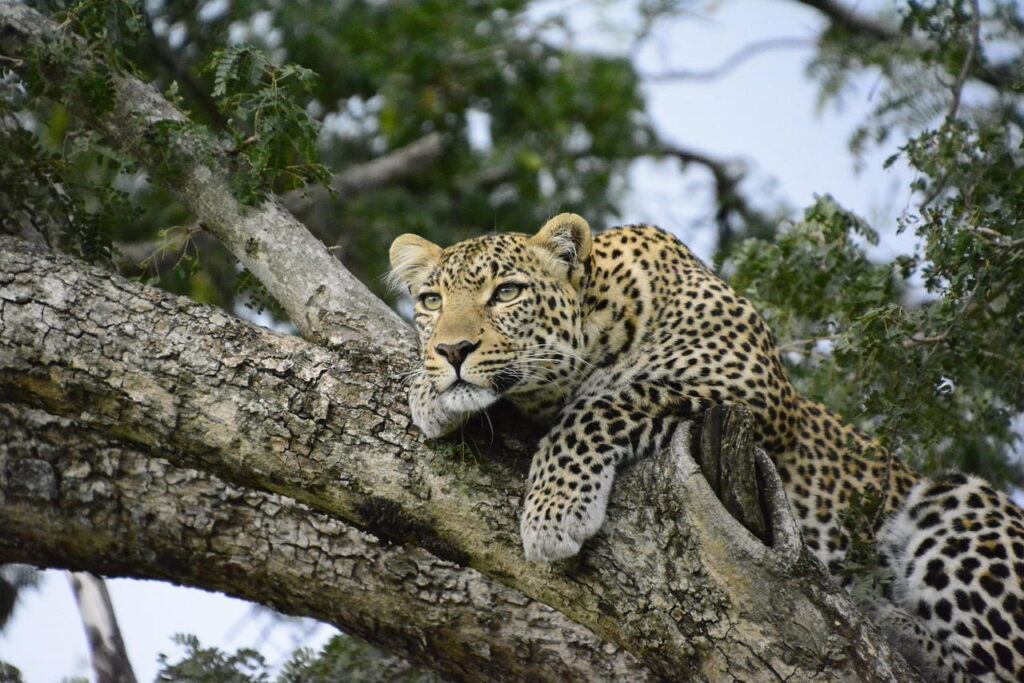
Rwanda’s wild landscapes hide some of Africa’s most secretive predators, and the leopard reigns supreme among them. Unlike the gorillas and elephants that dominate the spotlight, these solitary cats slip silently through forests, volcanic foothills, and open savannahs, leaving only faint signs of their presence. Every rustle in the undergrowth, every shadow along a ridge, hints at an animal that combines unmatched intelligence, agility, and cunning. For wildlife travelers, tracking Rwanda’s leopards is not just a safari—it’s an invitation to step into a world of stealth, strategy, and breathtaking discovery.
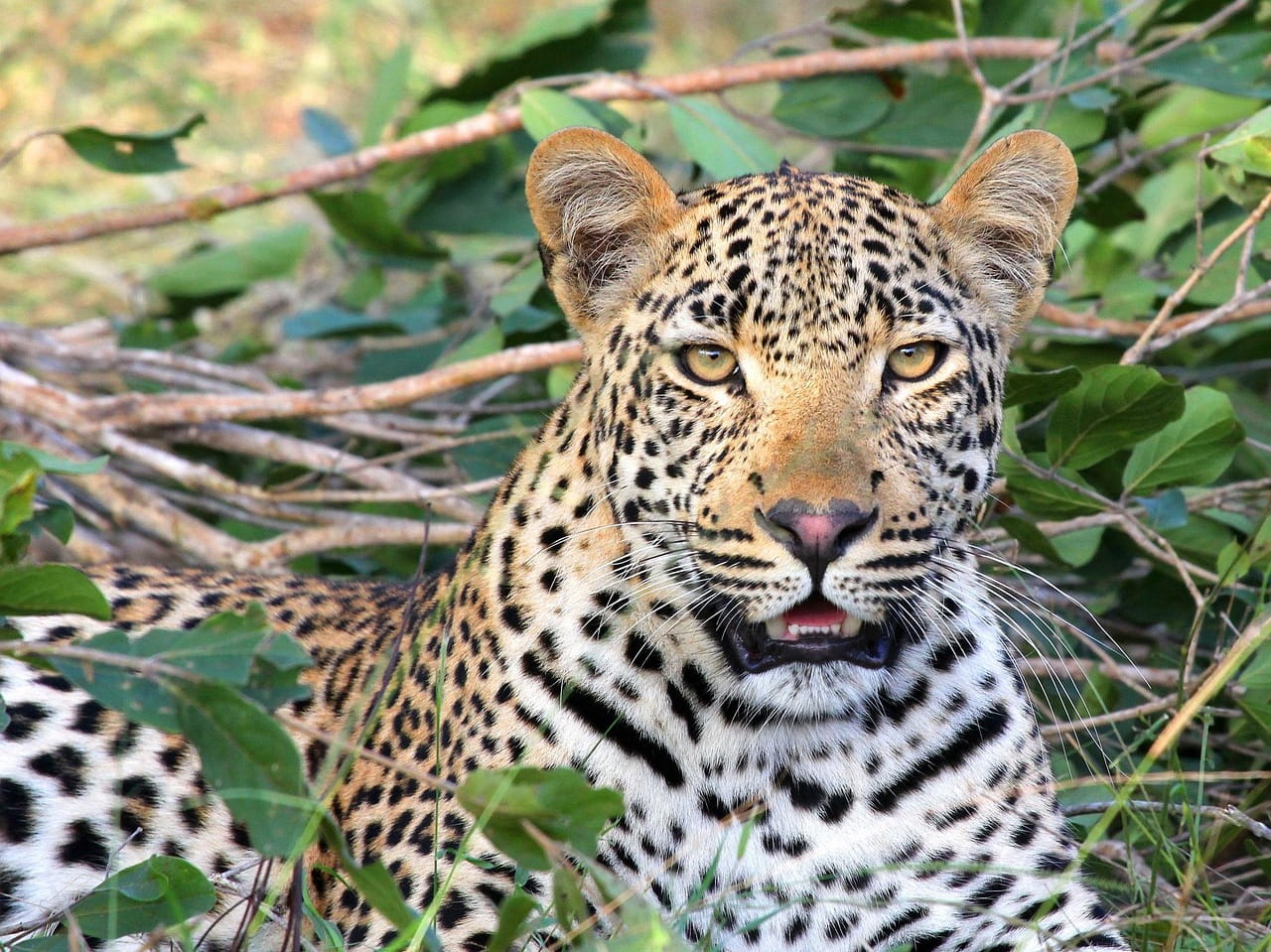
Rwanda Leopards – Rwanda’s Most Elusive Predator
Leopards in Rwanda are famously difficult to see, earning a reputation as the country’s most secretive large predator. Unlike Akagera lions that move in open plains, leopards rely on stealth, shadow, and patience, often blending perfectly into tall grasses, forest edges, or rocky volcanic terrain. Their spotted coats act as natural camouflage against dappled light filtering through trees or savannah vegetation. Because they are largely nocturnal and highly cautious around humans, many visitors to Rwanda’s parks never see one—yet the knowledge that these powerful cats are quietly moving through the same landscapes adds an undeniable thrill to every safari experience. Learn more about the Rwanda leopards and our exceptional tours in Rwanda now.
Leopard Habitat in Rwanda
Rwanda’s varied landscapes create an ideal environment for leopards, which are among the most adaptable big cats in Africa. From open savannah plains to dense tropical forests and steep volcanic foothills, these predators can survive in a remarkable range of ecosystems. Leopards rely on areas that provide both prey and cover, allowing them to stalk animals undetected before launching an ambush. Rwanda’s combination of wetlands, woodland, bamboo forest, and mountainous terrain gives the species multiple ecological niches where it can hunt and raise young while avoiding competition with other predators.
Where Leopards Live in Rwanda
Leopards occupy several protected ecosystems across Rwanda, ranging from the open savannah and wetlands of Akagera National Park to the dense mountain forests found in Nyungwe, Volcanoes, and Gishwati-Mukura. Their ability to adjust hunting behavior, prey selection, and movement patterns allows them to survive across these dramatically different landscapes despite rarely being seen by visitors.
Akagera National Park
Akagera National Park offers the best chance of seeing leopards in Rwanda, thanks to its open savannah plains, acacia woodlands, and scattered rocky outcrops that provide ideal hunting cover. These predators often patrol areas near water sources and wildlife corridors where prey such as impala, bushbuck, and small antelope gather. Because the vegetation is less dense than in Rwanda’s forest parks, leopards here are slightly easier to track, especially during early morning or evening game drives when they are most active.
Nyungwe Forest National Park
In Nyungwe Forest National Park, leopards inhabit one of the largest remaining montane rainforests in East Africa. The thick canopy, steep valleys, and tangled vegetation create a challenging environment for sightings, but they provide excellent cover for these secretive cats. Forest leopards here often prey on monkeys, duikers, and smaller mammals, moving silently along forest trails and ridgelines where wildlife activity is concentrated.
Volcanoes National Park
The volcanic slopes and bamboo forests of Volcanoes National Park also support leopard populations, although encounters are extremely rare due to the rugged terrain and dense vegetation. These leopards move through a landscape dominated by steep hillsides and thick mountain vegetation, relying heavily on stealth and patience while hunting small antelope and forest animals that inhabit the volcanic foothills.
Gishwati-Mukura National Park
Gishwati-Mukura National Park, Rwanda’s newest protected forest area, provides a smaller but important habitat for leopards as conservation efforts restore this recovering ecosystem. With increasing forest cover and growing wildlife populations, the park is gradually becoming more suitable for predators that require dense vegetation and stable prey numbers. Although leopard sightings here are uncommon, the presence of these elusive cats reflects the ongoing recovery of Rwanda’s forest biodiversity.
Physical Characteristics of Rwanda Leopards
Rwanda’s leopards are powerful and highly adaptable predators, recognized as one of the most exclusive member of the Rwanda Big 5 for their muscular build, distinctive rosette-patterned coats, and exceptional climbing strength. Across the country’s varied landscapes, their stealth, camouflage, and ability to hunt both on the ground and in trees make them one of the most elusive and fascinating big cats in Central Africa.
Size, Strength, and Appearance
Leopards in Rwanda display the classic physical traits that make this species one of Rwanda’s Big Five, as the most powerful and adaptable predators. Adult leopards in the country typically weigh between 30 and 90 kilograms (65–200 pounds), with males generally falling at the upper end of that range while females remain noticeably smaller. Body length commonly ranges from 90 to 190 centimeters (3–6 feet), and their long, muscular tails—often reaching up to 110 centimeters (about 3.5 feet)—help them maintain balance when climbing trees or navigating rocky volcanic terrain.
Male vs Female Size Differences
Like leopards across Africa, Rwanda’s individuals show sexual dimorphism, meaning males are significantly larger and more muscular than females. Males develop broader heads, thicker necks, and heavier forelimbs, which give them the strength to subdue prey and defend their territories from rival males. Females are lighter and more agile, a trait that supports the demanding work of hunting while also raising cubs in dense vegetation where stealth is critical.
Rosette Patterns and Natural Camouflage
Their golden coat covered in black rosette patterns provides exceptional camouflage in Rwanda’s diverse landscapes. These rosettes—dark rings with lighter centers—vary in shape and spacing from one leopard to another, allowing wildlife researchers and safari guides to identify individual animals through photographic records. In the dappled light of acacia woodlands or beneath the forest canopy of Nyungwe, these patterns help leopards blend seamlessly into shadows and foliage.
Strength, Climbing Ability, and Night Sightings
Rwanda leopards are also known for their remarkable jaw strength and climbing ability. Their powerful jaws can deliver a suffocating bite to the throat of prey, while strong shoulder and neck muscles allow them to drag animals weighing more than their own body weight into trees to protect their kills from scavengers. In Akagera National Park, visitors on guided Akagera night game drives occasionally have the rare opportunity to see a leopard moving silently through the savannah or resting in a tree branch under the glow of a spotlight, offering one of the most thrilling wildlife encounters in Rwanda.
Leopards vs Other African Leopards
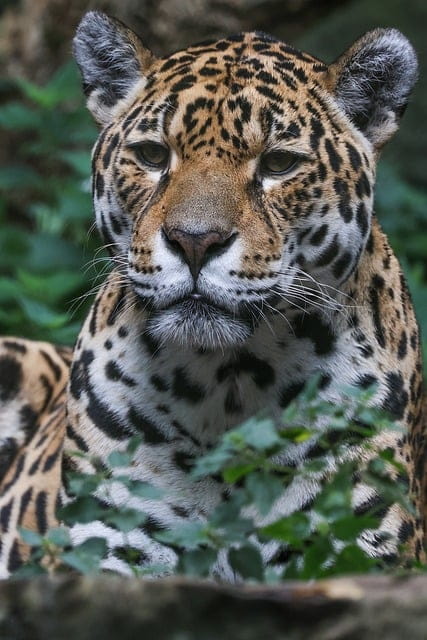 Leopards across Africa show incredible adaptability, with each population excelling in the environments they call home, from open savannahs to dense forests. While size, speed, and hunting strategy vary, all leopards rely on stealth, precision, and territorial skill, making them formidable predators regardless of region.
South Africa Leopards vs Rwanda Leopards
Leopards in South Africa tend to grow larger on average, benefiting from a more abundant prey base including antelopes and medium-sized mammals. Adult males often weigh 60–70 kg and can reach speeds up to 65 km/h in open terrain. Rwanda’s forest leopards are more compact, weighing around 38–48 kg, with short-burst speeds of 45 km/h, optimized for sudden ambushes in dense vegetation. Both populations are solitary, with females raising cubs alone, though South African leopards may encounter more potential mates across their expansive territories. In a hypothetical one-on-one clash over territory or a mate, the South African leopard’s size and raw strength could provide an advantage, but the Rwandan leopard’s agility and forest adaptation could allow it to outmaneuver its larger rival in tight, wooded terrain.
-
Size: South Africa larger
-
Speed: Slight edge to open-terrain South Africa
-
Strength: South Africa stronger
-
Family: Solitary in both regions
-
Fight Outcome: South Africa likely wins in open areas; Rwanda excels in dense forest
Leopards in Botswana vs Rwanda
Botswana leopards live in more open landscapes, making sightings easier but exposing them to longer chases and more competition. They typically weigh 55–65 kg and can sprint up to 60 km/h, slightly heavier and faster than Rwanda’s forest leopards, which weigh 40–50 kg and reach bursts of 40 km/h in dense terrain. Strength is comparable, though Botswana leopards rely on endurance, while Rwandan leopards use explosive power and agility to navigate rugged hills and thick forests. Both populations are solitary and fiercely territorial. In a hypothetical fight, a Botswana leopard could dominate in open areas with brute force, whereas a Rwanda leopard would leverage stealth and terrain familiarity to evade or outmaneuver its rival.
-
Size: Botswana slightly larger
-
Speed: Rwanda quicker in forests; Botswana faster in open areas
-
Strength: Roughly equal; Botswana endurance vs Rwanda explosive power
-
Family: Solitary in both
-
Fight Outcome: Botswana dominates in open areas; Rwanda wins in dense terrain
Kenya and Tanzania Leopards vs Rwanda Leopards
Leopards in Kenya and Tanzania often exist at higher population densities in savannah and semi-wooded habitats, which leads to more frequent competition and a slightly leaner physique compared to Rwandan forest leopards. Rwanda leopards, being solitary and elusive in rainforests, rely on stealth and camouflage over brute speed. Kenya/Tanzania leopards can take down larger prey more regularly, demonstrating superior raw strength, but Rwandan leopards excel at moving silently through dense vegetation to ambush smaller or similarly sized prey. Families are solitary across all regions, but higher density in East Africa can lead to more occasional social encounters. In a head-to-head, an East African leopard may overpower a Rwandan counterpart in open savannah, but in the forest, Rwanda’s agility and terrain mastery could turn the odds in its favor.
-
Size: Kenya/Tanzania slightly heavier
-
Speed: Rwanda faster in dense forest; Kenya/Tanzania in open plains
-
Strength: Kenya/Tanzania stronger
-
Family: Solitary hunters everywhere
-
Fight Outcome: Kenya/Tanzania wins in savannah; Rwanda dominates in thick forests
Rwanda Leopards – Unique Traits
Rwandan leopards are specialized for dense forest life, making them smaller, more agile, and incredibly stealthy compared to their African cousins. While they may not take down the largest prey as consistently as South African or East African leopards, they thrive on elusive hunting techniques and clever ambushes. Speed is situational: rapid bursts allow them to navigate steep slopes and tangled undergrowth with remarkable efficiency. Strength is concentrated in climbing and maneuvering rather than brute force. These leopards are far less habituated to humans and vehicles, so encounters are rare and brief. If a fight occurred in their forest home, the Rwandan leopard’s speed, camouflage, and environmental mastery would likely outweigh the size advantage of a leopard from another region.
-
Size: Smaller than other African populations
-
Speed: Exceptional in dense forests
-
Strength: Adapted for climbing and ambush
-
Family: Solitary; highly territorial
-
Fight Outcome: Dominates in forested terrain; disadvantaged in open areas
Overall Comparison
Each leopard population excels in its environment. South African leopards are the strongest, handling larger prey in open terrain, while Rwandan leopards are the most elusive, moving silently through dense forests. Botswana and East African leopards are fastest across savannahs, but Rwandan leopards shine in short-burst agility. Hunting style varies: Rwanda leopards use stealth and precision, while South African and East African leopards rely on power and endurance. Rwandan leopards are also the most endangered. In a territorial clash, the winner depends on terrain: strength favors South Africa, savannah skill favors East Africa, and forest cunning favors Rwanda.
-
Strongest: South African leopards can drag prey up to 3× their body weight (typically 60–90 kg), dominating open terrain where larger antelope species roam.
-
Fastest: Botswana and East African leopards reach speeds up to 58 km/h on open savannahs; Rwandan leopards sprint shorter bursts of 40–45 km/h but maneuver sharply through dense forest.
-
Best Hunters: Rwandan leopards take 10–15 small prey items per week using stealth and ambush tactics; South African and East African leopards hunt larger prey (50–150 kg) with power and endurance.
-
Most Elusive: Rwandan leopards spend 70–80% of their time hidden in forest canopy or thick undergrowth, making sightings extremely rare.
-
Most Endangered: Rwanda hosts only estimated 80–120 individuals, facing severe habitat fragmentation; other African populations number in the thousands.
-
Territorial Scuffle Winner: Terrain rules: strength favors South African leopards on open plains, speed and endurance favor East African leopards on savannahs, and Rwandan leopards dominate dense, forested hills with stealth and agility.
Behavior and Hunting for Rwanda Leopards
What sets Rwanda leopards apart is their ability to adjust hunting behavior based on location and conditions. In thick forests, they rely more on silence and patience, while in more open areas they use terrain and timing to their advantage. This flexibility allows them to survive in environments where visibility is limited and prey behavior varies significantly. As a result, they remain one of the most successful yet rarely seen predators in Rwanda, perfectly adapted to both its jungle-like forests and fragmented savannah landscapes.
The Hunting Strategy of a Jungle Leopard
Leopards in Rwanda display highly refined hunting behavior shaped by the country’s mix of dense forests and broken savannah terrain. In forested regions, these cats rely heavily on stealth, moving slowly along narrow animal trails carved through thick vegetation before launching a sudden, close-range attack. In more open environments, they use termite mounds, tall grasses, and scattered trees as cover, carefully positioning themselves downwind of prey. This ability to shift tactics based on terrain makes Rwanda’s leopards exceptionally efficient and difficult to detect.
Nocturnal and crepuscular hunting patterns
Rwanda leopards are primarily active during the early morning hours and after sunset, when temperatures drop and prey becomes more active. In heavily forested areas, they may also hunt during overcast days when light levels are low and visibility is reduced. Their night vision is highly adapted, allowing them to detect movement in near darkness while remaining almost invisible themselves. This timing not only improves hunting success but also helps them avoid human activity and larger predators.
Ambush predator tactics
Climbing trees to store prey away from scavengers
One of the most defining behaviors of Rwanda leopards is their tendency to drag kills into trees, particularly in areas where scavengers or competing predators may be present. Using immense upper-body strength, they can lift prey heavier than themselves into branches several meters above the ground. In Rwanda’s landscapes, this behavior is especially important for protecting food from hyenas and other opportunistic animals. Tree storage also allows leopards to feed over several days without losing their kill.
Typical prey in Rwanda:
-
antelope
-
monkeys
-
bushbuck
-
small mammals
-
birds
-
reptiles
Social Structure and Family Life
Rwanda’s leopards live largely independent lives, coming together only briefly for mating before returning to solitary movement across their territories. This independence reduces competition for food and allows each animal to adapt its movements to prey availability and terrain. In a country defined by dense forests, rolling hills, and fragmented habitats, this solitary structure helps leopards remain undetected while maintaining control over their environment.
Leopard Territory and Solitary Lifestyle
Male leopards in Rwanda establish expansive territories that may overlap with the ranges of several females, particularly in areas where prey is abundant. These territories are carefully maintained and communicated through scent marking, claw marks on tree trunks, and low-frequency vocalizations that travel through forest and savannah landscapes. In Rwanda’s mixed terrain, territorial boundaries often follow natural features such as rivers, ridgelines, and forest edges, allowing leopards to patrol efficiently while minimizing direct conflict with rivals.
Leopard Parenting and Cubs
Female leopards in Rwanda take on full responsibility for raising their young, beginning with a gestation period of roughly three months before giving birth to a small litter, typically two to three cubs. To protect them from predators and disturbances, mothers conceal their cubs in dense vegetation, rocky crevices, or thick forest cover, frequently relocating them to avoid detection. Over the course of 18 to 24 months, the mother teaches essential survival skills—how to stalk, hunt, and navigate their environment—gradually preparing them to live independently in Rwanda’s challenging and competitive ecosystems.
Rwanda Leopard Lifespan and Survival
Leopards in Rwanda face a demanding environment that directly influences how long they survive in the wild, with most individuals living around 12 to 15 years under natural conditions. Their longevity depends heavily on access to stable prey populations, secure territory, and minimal human disturbance, all of which can vary across Rwanda’s landscapes. In contrast, leopards in protected or managed environments can live well beyond 20 years, highlighting how external pressures—rather than biology alone—often determine survival in the wild.
How Long Leopards Live
The lifespan of a Rwandan leopard is closely tied to the challenges it encounters, including competition for territory, injury during hunts, and the gradual impact of environmental stressors. Younger leopards are particularly vulnerable as they disperse from their mothers and attempt to establish their own range, often facing conflict with dominant males or struggling to secure reliable food sources. Over time, ongoing threats such as habitat fragmentation, human-wildlife conflict near park boundaries, poaching, and declining prey availability can significantly reduce life expectancy.
Leopards and Rwanda’s Conservation Story – The Return of Predators to Rwanda
Rwanda’s leopard population has experienced a gradual recovery following periods of decline linked to habitat loss and regional instability, with conservation efforts playing a critical role in their return. Strengthened protection within the national park system, combined with focused initiatives like the restoration of Akagera (like the lions of Akagera) and increased predator monitoring, has helped stabilize habitats and improve conditions for large carnivores. Anti-poaching patrols and long-term conservation planning continue to support the presence of leopards across the country, signaling a broader success in restoring Rwanda’s predator populations and overall ecosystem balance.
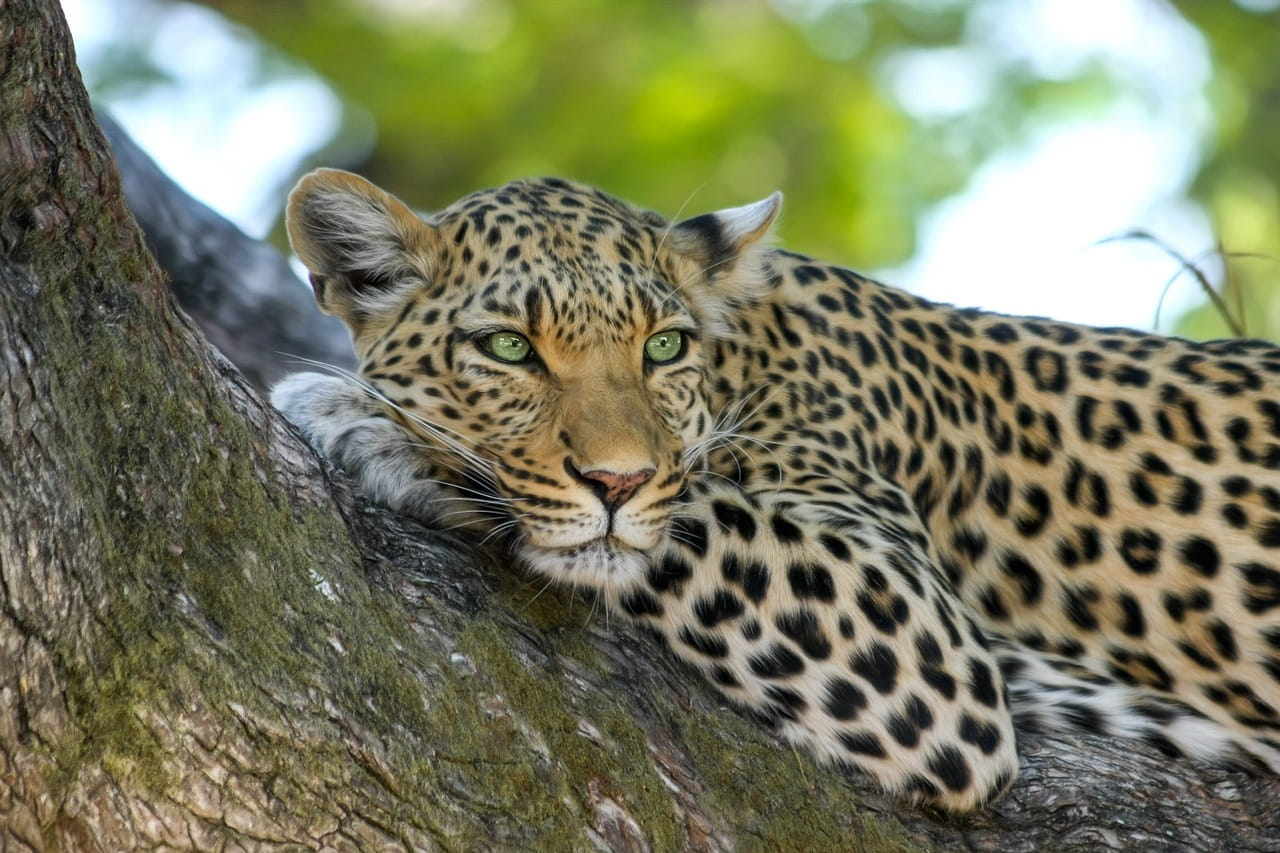
Leopard Tracking Packages in Rwanda with Amahoro Tours
3 Day Leopard Safari in Akagera National Park
This 3 Day Akagera Safari through Rwanda’s eastern wilderness offers a rare opportunity to witness the country’s most elusive predator, with leopards moving silently through the savannah and woodland landscapes, especially during guided night drives when they are most active. Blending boat safaris, full-day game drives, and diverse ecosystems, the experience places you in prime leopard territory while surrounding you with an incredible range of wildlife, making it one of the most dynamic and rewarding ways to encounter Rwanda’s hidden big cats in their natural environment.
6 Day (5 Nights) Akagera Leopard Tracking Safari and Gorilla Trekking
This 6 days Rwanda gorilla safari package blends the best gorilla trekking in Rwanda with immersive safari experiences, giving travelers the rare chance to follow leopard movement patterns across varied terrain while learning how guides interpret tracks, behavior, and nighttime activity. From extended game drives in prime predator habitat to after-dark tracking opportunities, the itinerary offers a deeper, more strategic way to encounter Rwanda’s elusive leopards alongside its most iconic wildlife.
10 Days Leopard Trekking and Magical Safari
This 10 day Rwanda itinerary adventure delivers a deep, multi-region safari experience where travelers not only encounter primates and diverse wildlife, but also gain insight into how leopards navigate and survive across the country’s varied ecosystems. Through extended time in the field, guests have increased opportunities to interpret tracks, movement patterns, and predator behavior—offering a more immersive approach to understanding and potentially spotting Rwanda’s elusive leopards while exploring the country’s full ecological range.
11 Day Gorilla Trekking and Safari (with Leopards!!)
This 11-day Rwanda tour delivers an unmatched deep dive into the country’s most iconic wildlife experiences, blending gorilla trekking, chimpanzee encounters, golden monkey tracking, and classic savannah safari moments into one seamless adventure. Along the way, you’ll also encounter Rwanda’s elusive leopards—especially during Akagera night drives—while exploring diverse ecosystems, rich cultural traditions, and conservation success stories that make every day feel purposeful and unforgettable.
Leopards in Local Culture and Ecosystems
Leopards in Rwanda hold a powerful dual role, shaping both the ecological stability of the landscape and the cultural identity of surrounding communities. As apex predators, they regulate populations of antelope and smaller mammals, preventing overgrazing and maintaining balance across savannah and forest ecosystems, particularly in areas like Akagera where predator-prey dynamics have been carefully restored. Beyond their ecological impact, leopards are deeply woven into regional storytelling and symbolism, often representing intelligence, stealth, and resilience—qualities that mirror their elusive presence in the wild and reinforce their significance not just as a species, but as a living emblem of Rwanda’s natural heritage.
Best Cameras For A Leopard Safari
Book A Leopard Safari Tour In Rwanda Now
A glimpse of a Rwandan leopard is a moment few will ever forget, a thrilling reward for patience, timing, and careful tracking. Including a leopard safari with your wildlife adventure adds a layer of excitement and wonder that only Rwanda can offer, from night drives in Akagera to forest encounters in Nyungwe and Volcanoes National Park. By booking with Amahoro Tours, you’ll be guided by experts who know exactly where and how these elusive predators move, maximizing your chances to witness their intelligence, grace, and power up close. Don’t just see Africa—experience its hidden thrill and make memories that last a lifetime. Book your tour today!
See What Our Guests Are Saying