
Tree Climbing Lions of Ishasha In Uganda Safari
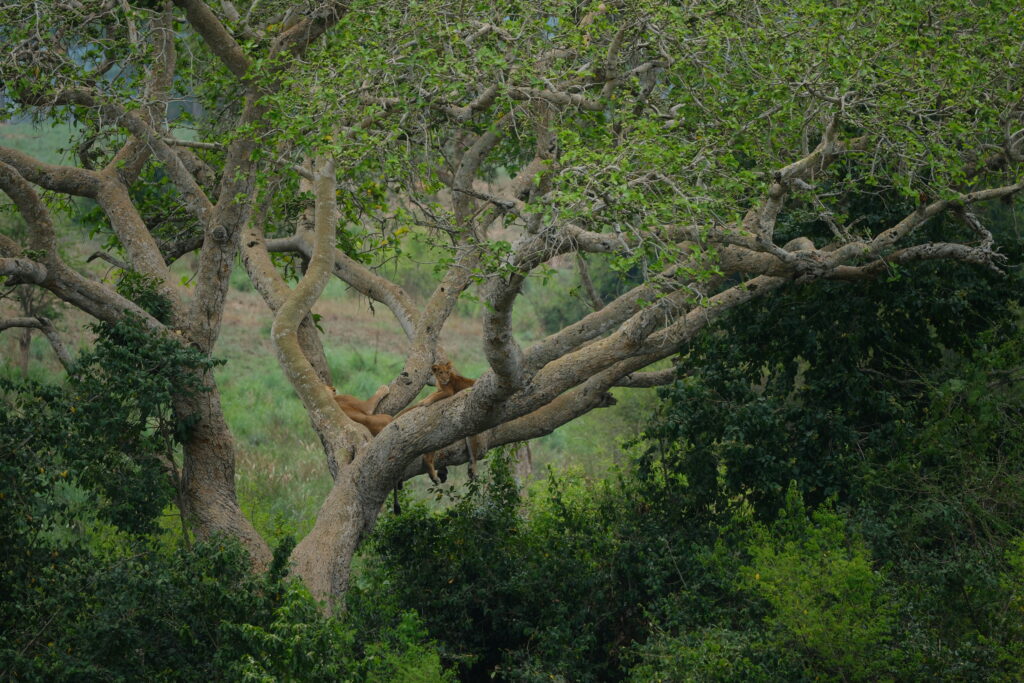
Few wildlife experiences in Africa compare to spotting a pride of lions stretched across the branches of a giant fig tree. In Uganda’s famous Ishasha Sector of Queen Elizabeth National Park, travelers have the rare opportunity to witness one of the world’s most unusual predator behaviors—tree climbing lions relaxing high above the savanna. Combined with expert guides, outstanding photography opportunities, and the chance to pair your safari with gorilla trekking and chimpanzee tracking, this is one of Uganda’s most sought-after wildlife adventures. Amahoro Tours helps maximize your chances of finding these remarkable lions and creating a safari experience you’ll never forget.
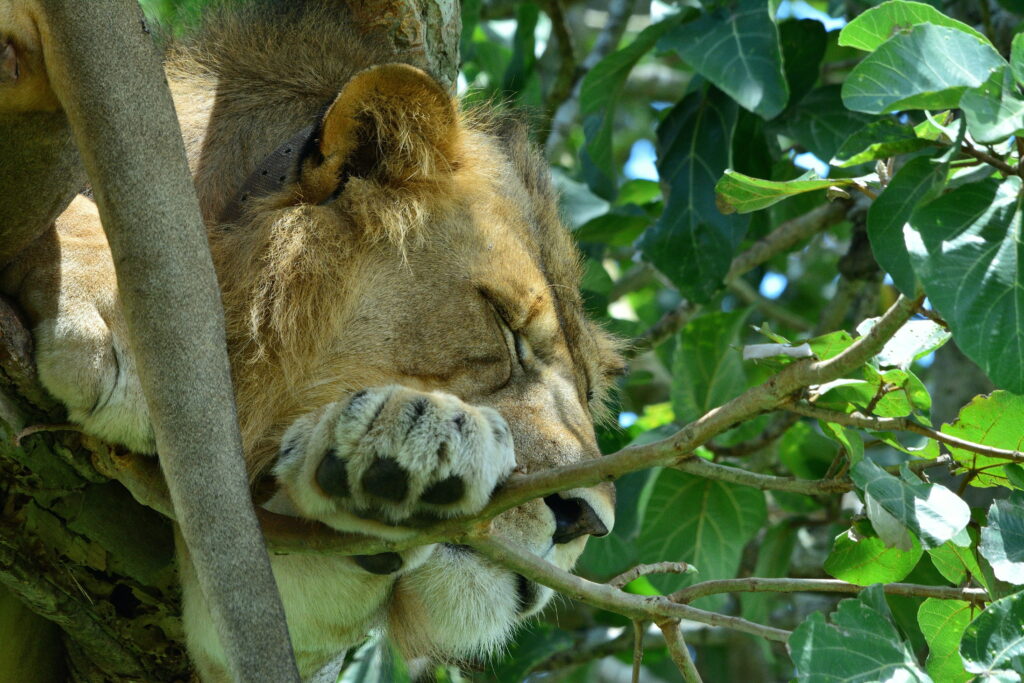
The Lions Themselves: Understanding Ishasha’s Tree Climbing Lions
Join Amahoro Tours on a Uganda safari to witness the rare tree climbing lions of the Ishasha Sector in Queen Elizabeth National Park, one of the few places on Earth where entire lion prides can regularly be seen resting up to 50 feet above the ground in fig trees—a remarkable behavior displayed by only a small fraction of Africa’s 20,000–25,000 wild lions.
What Are Tree Climbing Lions?
Tree climbing lions are wild lions that regularly rest, sleep, and spend extended periods perched in the branches of large trees, a behavior rarely observed among lion populations across Africa. In Uganda’s Queen Elizabeth National Park, entire prides can sometimes be seen lounging 15 to 50 feet above the ground in sprawling fig trees. Unlike leopards, which are natural climbers, lions are built for power rather than agility, making this behavior particularly remarkable. Visitors may witness multiple adult females, cubs, and even large males balancing comfortably on thick branches for several hours during the heat of the day, creating one of the most unusual wildlife spectacles found anywhere on safari.
Where Are Tree Climbing Lions in the World?
Regularly observed tree climbing lions are found in only a few locations worldwide. The most famous populations live in Uganda’s Ishasha Sector and Tanzania’s Lake Manyara National Park, where the behavior has been documented for decades. While isolated cases have occasionally been reported in countries such as Botswana, Kenya, South Africa, and Zimbabwe, these sightings are generally uncommon and unpredictable. Ishasha remains one of the few destinations where guides actively search for lions in tree canopies because the behavior occurs frequently enough to be considered a signature attraction rather than a rare coincidence.
A Rare Behavior Found in Only a Few Places in Africa
Africa is home to an estimated 20,000 to 25,000 wild lions, yet only a tiny fraction are known to climb trees on a regular basis. Most lion populations spend nearly all of their lives on the ground, resting in grasslands, hunting across open savannas, and seeking shade beneath vegetation. This makes the Ishasha lions exceptionally unusual within the species. Researchers believe the behavior developed over generations and became culturally learned within certain prides, allowing cubs to observe adults and adopt the same habits. The result is a distinctive lion population whose behavior differs dramatically from the vast majority of lions found across the continent.
Why Can’t Other Lions Climb Trees?
Most lions are physically capable of climbing trees, especially when they are young, but the vast majority rarely do because their size, weight, and hunting habits are adapted for life on the ground. Adult male lions can weigh between 330 and 550 pounds, making it difficult and energy-intensive to navigate branches safely compared to lighter, more agile species such as leopards. Across most of Africa, lions find shade, rest, and hunting opportunities without needing to leave the ground, so tree climbing offers little advantage. In places like Ishasha, however, generations of lions have developed and passed down the behavior, allowing entire prides to use large fig trees as elevated resting platforms. This combination of environmental conditions and learned behavior is what makes Uganda’s tree climbing lions so exceptional compared to other lion populations throughout Africa.
Why Do Ishasha Lions Climb Trees?
Despite decades of observation, scientists still debate the exact reason Ishasha’s lions spend so much time in the trees. The most widely accepted explanation involves a combination of environmental benefits rather than a single factor. During midday temperatures that frequently reach 80°F to 90°F (27°C to 32°C), the branches provide cooler conditions and stronger breezes than the ground below. Climbing also allows lions to escape persistent biting insects such as tsetse flies that are common throughout the Ishasha plains. From elevated positions, they gain a broad view of surrounding grasslands where prey species like Uganda kob, buffalo, and topi move throughout the day. Many experienced guides believe the behavior developed through a combination of comfort, insect avoidance, and improved visibility, eventually becoming a learned tradition passed between generations of Ishasha lions.
What Makes Ishasha Lions Different From Other African Lions?
The lions of the Ishasha Sector in Queen Elizabeth National Park stand apart from nearly every other lion population in Africa because they regularly spend significant portions of their day resting high above the ground in large fig and acacia trees. While lions across the continent are known for seeking shade beneath trees, Ishasha’s prides often climb into the canopy itself, creating a wildlife spectacle rarely seen elsewhere. This behavior is believed to have been passed between generations, with young lions observing older pride members and adopting the same habits. Over time, the practice has become one of the defining characteristics of the region, making Ishasha one of the world’s premier destinations for travelers hoping to witness an unusual side of lion behavior.
Lions That Spend Hours Above Ground
Most African lions spend up to 20 hours per day resting on the ground, typically beneath trees or in tall grass where they can conserve energy between hunts. Ishasha lions break this pattern by regularly climbing into trees and remaining there for extended periods, sometimes throughout the hottest hours of the day. Researchers and guides have observed multiple generations exhibiting this behavior, suggesting it is not simply instinctive but also learned through pride culture. Young cubs often begin experimenting with climbing after watching mothers, siblings, and dominant females move confidently through the branches.
Key Facts About Ishasha’s Tree-Dwelling Behavior
- Lions may remain in trees for 2 to 8 consecutive hours
- Most sightings occur between 10:00 AM and 4:00 PM
- Entire prides of 5 to 15 lions can sometimes be seen in a single tree
- Cubs often begin climbing during their first year of life
- Tree climbing behavior has been documented in Ishasha for decades
Physical Characteristics of Ishasha Lions
Physically, Ishasha lions share many characteristics with other East African lion populations, but seeing these powerful predators suspended in tree branches creates an entirely different perspective on their size and athleticism. Adult males display impressive musculature and broad shoulders, while females remain slightly smaller and perform the majority of the pride’s hunting duties. Their coats typically range from golden tan to darker sandy shades that blend well with the surrounding savanna, while male mane coloration varies from light blond to deep brown depending on age, genetics, and environmental conditions.
Physical Characteristics of Ishasha Lions
- Adult males typically weigh 330–500 pounds (150–225 kg)
- Adult females typically weigh 250–350 pounds (115–160 kg)
- Males can reach lengths of 8–10 feet (2.4–3 meters) including the tail
- Females conduct roughly 80–90% of coordinated pride hunts
- Similar in size to lions in Kenya and Tanzania, but generally smaller than some of the largest southern African males found in Botswana and South Africa
- Mane coloration ranges from light blond to dark brown, with older males often displaying fuller manes
The Incredible Skill of Climbing Massive Fig Trees
Watching a fully grown lion climb into a fig tree is one of the most surprising sights on any African safari. Despite their weight and powerful build, Ishasha lions navigate large branches with remarkable balance and confidence. Some climb gradually using thick trunks as natural ladders, while others can move between major branches with surprising agility. Visitors are often amazed to find multiple adults and cubs scattered throughout the same tree, resting on branches that appear far too narrow to support such large animals.
Tree Climbing Facts Visitors Often Witness
- Lions are commonly seen 15 to 50 feet (4.5 to 15 meters) above the ground
- Large fig trees can support entire prides simultaneously
- Cubs learn climbing techniques by following adults into lower branches
- Some trees used by lions are estimated to be 50–100+ years old
- Lions often choose branches with the widest canopy coverage and strongest airflow
- Multiple lions can sometimes be observed spread across a single tree’s branch network at the same time, creating exceptional photography opportunities for safari guests with Amahoro Tours.
The Lion Prides of Ishasha
The tree climbing lions of the Ishasha Sector in Queen Elizabeth National Park live in organized family groups known as prides, where cooperation is essential for survival. These prides occupy territories that stretch across open savanna, acacia woodland, fig tree groves, and seasonal wetlands, creating one of the most productive lion habitats in Uganda. Unlike solitary predators, Ishasha lions spend much of their lives interacting with pride members through grooming, resting, hunting, and defending territory. For safari travelers, this means sightings often involve multiple lions rather than a single animal, providing opportunities to observe the social dynamics that make lions Africa’s most communal big cats.
Family Structure and Territory
Ishasha lion prides are built around related females that remain together for life, while males join and defend the pride for a period that often lasts several years before being challenged by rivals. Territory boundaries are maintained through scent marking, roaring, and direct confrontation when necessary. Because prey is abundant throughout the Ishasha plains, prides can establish stable territories and support multiple generations of lions living together in the same area.
Ishasha Pride & Territory Facts
- Typical pride size ranges from 5 to 15 lions
- Larger prides occasionally exceed 20 individuals
- Female lions often remain within the same pride for their entire lives
- Male coalitions typically consist of 2–4 males
- Territory sizes can range from approximately 20–150 square miles (50–390 sq km) depending on prey availability
- Roars can be heard from as far as 5 miles (8 km) away under favorable conditions
- Visitors commonly observe 3–10 lions during a successful Ishasha lion game drive
Cubs, Mothers, and Dominant Males
Much of lion society revolves around raising cubs and maintaining pride stability. Female lions cooperate extensively, sometimes nursing each other’s young and collectively protecting cubs from predators and rival males. Dominant males focus on defending territory and securing breeding rights, while females perform most hunting activities. For visitors, these relationships create some of the most memorable safari moments, from playful cubs chasing one another through the grass to adults greeting each other through grooming, rubbing heads, and vocal communication.
Lion Family & Social Behavior Facts
- Lion cubs are born after a gestation period of approximately 110 days
- Litters usually contain 1–4 cubs
- Cubs begin eating meat at around 3 months old
- Young lions remain dependent on the pride for 18–24 months
- Female lions conduct roughly 80–90% of pride hunting
- Dominant males may hold control of a pride for 2–5 years
- Lions communicate through more than 20 distinct vocalizations, including roars, grunts, growls, moans, and contact calls
- Adult males can consume up to 35–40 pounds (16–18 kg) of meat in a single feeding session
- Cubs spend much of their first year learning hunting, social, and survival behaviors by observing older pride members
Pride Hierarchy and Communication
Within every Ishasha pride exists a structured social system where relationships determine access to food, mating opportunities, and leadership roles. Adult females form the core of the pride and maintain long-term social bonds through grooming and cooperative cub rearing. Males establish dominance through size, strength, and displays of power, while younger lions gradually learn their place within the group. Communication plays a vital role in maintaining these relationships, with lions relying on scent marking, body posture, facial expressions, tail movements, and powerful vocalizations to coordinate activities across their territory.
Hierarchy & Communication Facts
- A lion’s roar can reach approximately 114 decibels
- Roars may travel up to 5 miles (8 km) across open savanna
- Pride members often spend 2–4 hours per day resting together in close contact
- Grooming sessions can last 10–30 minutes at a time
- Lions rest for approximately 16–20 hours per day
- Scent marks can remain detectable to other lions for several days
- Adult females typically rank above younger females and juveniles within the pride structure
- Coalitions of 2–4 males are generally more successful at holding territory than solitary males
- Visitors on safari with Amahoro Tours may observe everything from cub play sessions and grooming behavior to territorial roaring and interactions between dominant males and pride females.
Ishasha Lion Physical Characteristics vs Other Lions
The lions of the Ishasha Sector in Queen Elizabeth National Park safari share the same species traits as other African lions, but their physical presence appears different because of behavior, environment, and adaptation to the savanna-woodland mosaic. When seen resting in fig trees or moving through open plains, Ishasha lions often look leaner and more agile compared to some southern African populations, yet they still retain the full power, muscle density, and predatory strength typical of Panthera leo across the continent. Their coats, manes, and body proportions vary based on age, genetics, and climate, creating subtle differences when compared with lions in Kenya, Tanzania, Botswana, and South Africa.
Ishasha Lion Physical Profile (Key Measurements & Traits)
- Adult male weight: 330–500 lbs (150–225 kg)
- Adult female weight: 240–350 lbs (110–160 kg)
- Male body length (excluding tail): 5.5–8.5 ft (1.7–2.6 m)
- Total length including tail: up to 10 ft (3 m)
- Shoulder height: 3–4 ft (0.9–1.2 m)
- Mane growth begins at around 1.5–2 years of age
- Full mane development typically reached by 4–6 years
Comparison With Other African Lion Populations
While Ishasha lions fall within the standard size range for East African lions, subtle differences emerge when compared to other regions. Lions in East Africa (Uganda, Kenya, Tanzania) tend to be slightly lighter and more adapted to open savanna hunting, while some southern African lions—particularly in Botswana’s Okavango Delta and parts of South Africa—can reach heavier body weights due to different prey availability and habitat density. Mane thickness and coloration also vary widely depending on climate, with hotter regions often producing shorter, lighter manes.
Regional Comparison Snapshot
- Ishasha (Uganda): Males typically 330–500 lbs, often leaner build due to mixed woodland-savanna terrain
- Kenya (Maasai Mara): Similar range, often 350–520 lbs, with large prides and high-density prey areas
- Tanzania (Serengeti): Comparable size, often 330–500 lbs, well-studied populations with strong pride structures
- Botswana (Okavango Delta): Some of the largest individuals, males can exceed 500–550 lbs (225–250 kg)
- South Africa (Kruger region): Wide variation, typically 330–500+ lbs, with some exceptionally large males in protected reserves
Mane Coloration and Appearance Differences
One of the most visible differences between Ishasha lions and other African lions, such as the Akagera lions, is mane development, which is influenced by temperature, genetics, and age. In warmer regions like Uganda’s Ishasha plains, manes tend to be lighter and less dense than those seen in cooler southern African habitats. However, older Ishasha males can still develop full, dark manes that signal dominance and maturity within the pride. Coat coloration also shifts subtly depending on habitat, with Ishasha lions often blending into a mix of golden savanna grasslands and shaded woodland edges.
Mane & Appearance Traits
- Mane colors range from light blond, tawny, to dark brown
- Thicker manes are more common in cooler southern African regions
- Ishasha males often show lighter, less dense manes due to warmer temperatures
- Full mane maturity is typically reached by age 5–6 years
- Coat color averages golden tan to sandy brown for camouflage
- Scar patterns and facial markings are often used by guides to identify individual lions over time
Travelers on safari with Amahoro Tours often notice that while Ishasha lions are not dramatically larger or smaller than other African lions, their unique tree-climbing behavior and striking silhouettes in fig trees make them one of the most visually distinctive lion populations on the continent.
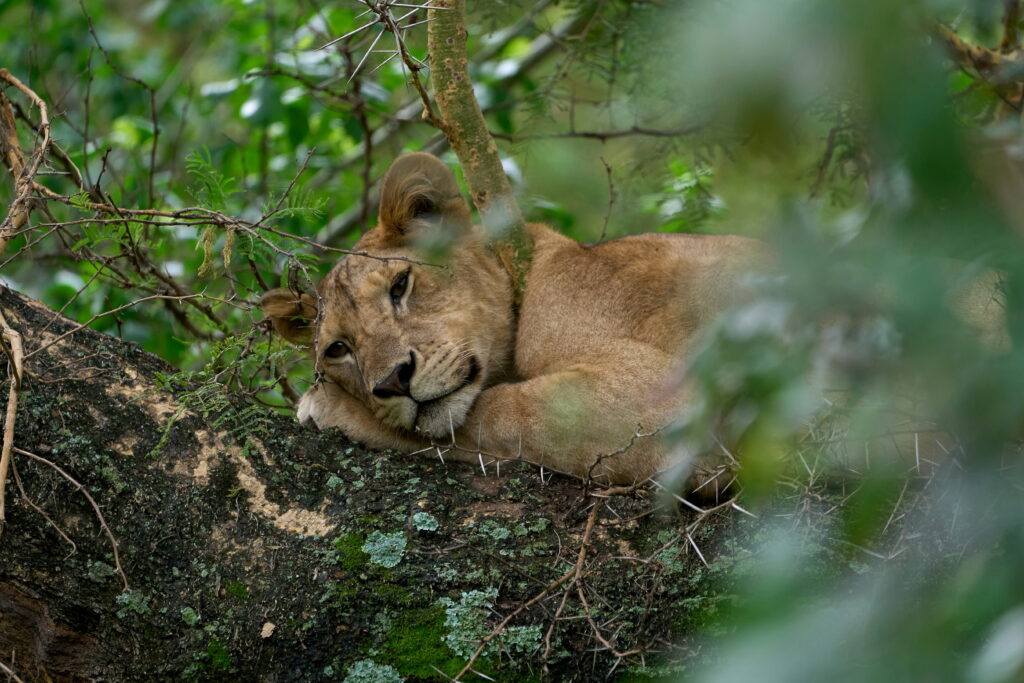
Planning Your Uganda Lion Safari
Planning a safari to see the tree climbing lions of Ishasha in Queen Elizabeth National Park requires understanding both location and timing, as sightings depend on movement patterns, seasonal conditions, and how the journey fits into a broader Uganda itinerary. Most travelers combine Ishasha with gorilla trekking, chimpanzee tracking in Kibale, chimpanzee tours in Kalinzu or chimpanzee treks in Kyambura Gorge, and classic game drives, creating a multi-ecosystem safari that moves from rainforest to savanna within a single trip. Because lion sightings are not guaranteed at a fixed point, experienced guides and well-timed game drives significantly increase the chances of seeing prides resting in fig trees or moving across the plains.
Where Is Ishasha Located?
The Ishasha Sector is located in the far southern region of Queen Elizabeth National Park in southwestern Uganda, close to the border with the Democratic Republic of Congo. It sits roughly 400–430 km (250–270 miles) from Entebbe, a drive that typically takes 7–9 hours depending on road conditions and stops along the route. The area is part of a larger transboundary ecosystem that supports elephants, buffalo, and large predator populations. Its remote positioning helps preserve its wild character while still remaining accessible from Uganda’s main safari hubs such as Kampala, Fort Portal, and Bwindi.
The Perfect Stop Between Gorilla Trekking and Safari
Ishasha is uniquely positioned between Uganda’s gorilla trekking regions and its major savanna safari circuit, making it a natural transition point for travelers moving between ecosystems. It lies approximately 60–90 km north of Bwindi Impenetrable National Park depending on entry gate, allowing travelers to combine mountain gorilla trekking with lion viewing in a single continuous journey. Because of this strategic location, many itineraries are designed to include Ishasha as a midpoint stop, offering a dramatic contrast between rainforest primates and savanna predators without requiring backtracking or long detours.
Murchison Falls and Uganda’s Big Game Safari Circuit
Expanding beyond southwestern Uganda opens the door to one of the country’s most powerful wildlife regions centered around Murchison Falls National Park, where the Nile River forces its way through a narrow 7-meter gorge before plunging 43 meters into the “Devil’s Cauldron.” This northern safari circuit delivers a completely different landscape from Ishasha’s savanna-woodland mix, featuring vast open plains, riverine forests, and some of the highest concentrations of wildlife in Uganda. Travelers often combine this region with western Uganda safaris to experience both predator-rich savannas and dramatic river ecosystems in a single itinerary.
Best Time to See Tree Climbing Lions in Uganda
The best time to see tree climbing lions in Ishasha depends on road conditions, prey movement, and seasonal wildlife behavior patterns within Queen Elizabeth National Park.
Dry Season Safaris (June–August & December–February)
During these months, wildlife viewing is typically more predictable due to thinner vegetation and improved road access. Temperatures often range between 75°F and 88°F (24°C–31°C), and lions are frequently seen resting in fig trees during the hotter midday hours. Game drives are easier to navigate, and visibility across the savanna is generally higher.
Wet Season Safaris (March–May & September–November)
The wet seasons bring heavier rainfall, with monthly precipitation often exceeding 100–150 mm in peak periods, creating lush green landscapes and lower visitor numbers. While some tracks can become muddy, lion sightings still occur regularly, and photography conditions are often enhanced by dramatic skies and vibrant vegetation.
What Time of Day Offers the Best Sightings?
Lion activity in Ishasha follows a predictable daily rhythm influenced by temperature and hunting behavior. Early morning game drives between 6:30 AM and 10:00 AM often provide opportunities to see lions returning from night hunts or resting near open plains. The late afternoon window, typically from 3:30 PM to 6:30 PM, is another prime period when lions become more active after the heat of the day begins to drop. During midday hours, especially between 11:00 AM and 3:00 PM, many prides retreat into fig trees or shaded areas, making this one of the best times to observe the famous tree climbing behavior for which Ishasha is known.
What to Expect on an Ishasha Game Drive
A drive through the Ishasha region of Queen Elizabeth National Park feels like a slow-moving search across open savanna and fig tree clusters where wildlife sightings unfold gradually rather than instantly. Visitors should expect frequent pauses as guides study the landscape, scan treetops, and listen for alarm calls that may signal predator movement. No two drives are the same, as lion activity shifts with temperature, prey movement, and time of day. The experience rewards attention to detail and patience, with every stretch of road offering the possibility of an unexpected encounter.
Searching for Lions in the Fig Trees
Locating tree climbing lions in Ishasha depends heavily on interpreting subtle environmental clues rather than simply driving to fixed points. Experienced guides rely on patterns such as fresh tracks along dusty roads, disturbed grass beneath fig trees, and the behavior of antelope reacting nervously to nearby predators. Certain large fig trees scattered across the Ishasha plains are known resting spots, particularly during the hotter hours when lions seek shade above ground level. These search techniques turn the game drive into a quiet process of reading the land rather than just covering distance.
Other Wildlife You May Encounter
Although lions are the main attraction, Ishasha supports a wide range of wildlife typical of Uganda’s savanna ecosystems. Elephant herds frequently move through the area in groups that can range from a handful of individuals to larger family units of 30 or more. Buffalo are commonly seen grazing in open clearings, sometimes forming aggregations that exceed 100 animals during peak seasons. Uganda kob and topi are among the most visible antelope species, often spotted in pairs or small herds of 5–25, while hyenas patrol the grasslands and leopards remain present but rarely seen. The region is also home to an impressive variety of birds, with hundreds of recorded species adding constant activity to the landscape.
Photography Tips for Tree Climbing Lion Safaris
Photographing lions in trees requires balancing reach, composition, and natural lighting conditions. Most safari photographers use telephoto zoom lenses between 100–400mm or 150–600mm to capture detail while maintaining distance. Early mornings and late afternoons offer the most favorable light, reducing harsh shadows and highlighting the warm tones of both lions and acacia or fig trees. Positioning the vehicle to frame the canopy against open sky or savanna background can significantly improve image clarity and depth.
Common Mistakes Safari Photographers Make
Many visitors miss strong shots in Ishasha by parking in positions where branches or other vehicles block the view into the canopy. Another frequent issue is relying too heavily on maximum zoom, which can isolate the subject but remove important environmental context that tells the full story of the sighting. A third mistake is impatience—arriving, shooting quickly, and leaving before lions shift positions or interact. The most compelling images often come from waiting through behavioral changes such as cubs climbing, pride members repositioning, or light shifting across the trees, rather than from immediate snapshots.
Amahoro Tours Uganda Safaris with Tree Climbing Lions
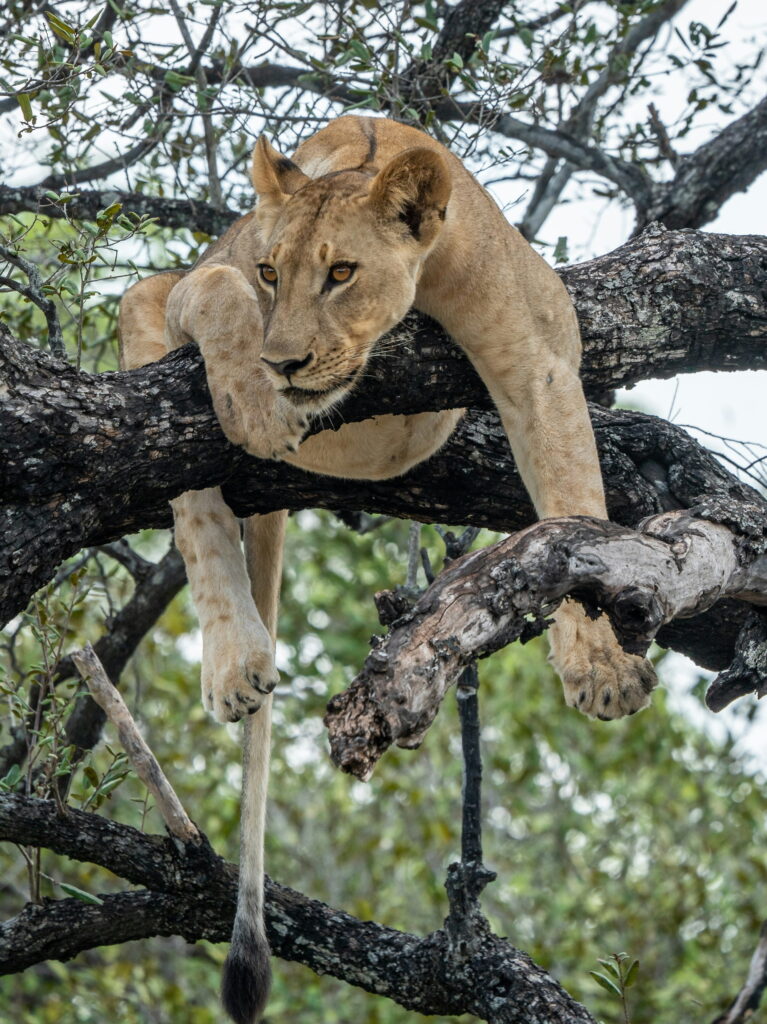 Discover Uganda’s incredible wildlife diversity with Amahoro Tours, where gorillas, chimpanzees, tree-climbing lions, river safaris, and unforgettable cultural encounters come together in one extraordinary adventure.
6 Day Gorilla Tracking and Uganda Lion Safari
This 6-day Uganda safari with Amahoro Tours combines mountain gorilla trekking in Bwindi Impenetrable Forest with classic wildlife viewing in Queen Elizabeth National Park (tree climbing lions), including game drives and a Kazinga Channel boat cruise, alongside cultural encounters and scenic travel through Rwanda’s Kigali, creating a diverse journey through primates, savannah wildlife, and iconic East African landscapes.
9 Day Uganda Primate and Safari with Lions
This 9-day Uganda safari with Amahoro Tours offers a well-rounded journey through the country’s most celebrated wildlife regions, combining gorilla trekking in Bwindi Impenetrable Forest with chimpanzee tracking in Kibale National Park and lion game drives in Queen Elizabeth National Park. Along the way, travelers enjoy a Kazinga Channel boat cruise, guided walks through Bigodi Wetland, and cultural encounters with the Batwa community, while also experiencing scenic drives and a domestic flight that connect Uganda’s rainforests, crater lakes, and open plains into one continuous adventure focused on primates, big game, and diverse ecosystems.
10 Day Uganda Tour – Gorilla, Primates, Safaris (with lions) and Cultural Tour
Experience the very best of Uganda on this immersive 10 day Uganda safari that combines mountain gorilla trekking in Bwindi, chimpanzee tracking in Kibale Forest, classic wildlife safaris in both Queen Elizabeth and Murchison Falls National Parks, and rhino trekking at Ziwa Rhino Sanctuary. Along the way, guests enjoy game drives in search of lions, elephants, buffalo, giraffes, and leopards, boat safaris on the Kazinga Channel and Nile River, guided walks through the wildlife-rich Bigodi Wetland, and unforgettable encounters with some of Africa’s most iconic species. Designed by Amahoro Tours, this journey showcases Uganda’s remarkable diversity, blending rainforest adventures, Big Five style wildlife viewing, spectacular landscapes, and authentic safari experiences into one unforgettable itinerary.
Book Your Tree Climbing Lion Safari in Uganda
Seeing the tree climbing lions of Ishasha is one of Africa’s most unimaginable wildlife experiences. Picture a pride of lions stretched across the branches of a giant fig tree while the Ugandan savanna unfolds below. Pair this rare sight with gorilla trekking, chimpanzee tracking, and classic game drives, and you have the ultimate Uganda safari. Contact Amahoro Tours today and let us create your custom adventure to see Uganda’s famous tree climbing lions.
Please Fill Out The Form Below To Help Us Plan Your Perfect Tour
"*" indicates required fields
See What Our Guests Are Saying
 Rwanda is Amazing - Had a fantastic experience with Amahoro tours (through jenman safaris).
We got to see such amazing wildlife in Rwanda as well as some cultural/historical places like the genocide memorial/the king's palace/hotel des milles collines. The gorilla and chimpanzee trekking were real highlights. Accommodations were excellent!
And of course, thank you to our guide/driver Mugabe in helping us get to our various locations and explaining various aspects about Rwanda!

 Connector38769434417
July 21, 2026
This is THE best tour company in Rwanda! - My husband and I had the absolute best experience with Amahoro Tours and highly recommend you book your Rwanda trip with them. Amos was extremely helpful and we fell in love with Rwanda in large part because we had such a great guide named Edmond who was very professional, prompt, and had a wealth of knowledge. He’s likely the best driver in the whole country so you should request him specifically! After visiting and working with other tour companies in Rwanda, Tanzania, and Zanzibar, we can confidently say Amahoro Tours was the best and we look forward to using them again in the future.
 travel_more202
January 10, 2026